+32 460 23 96 44

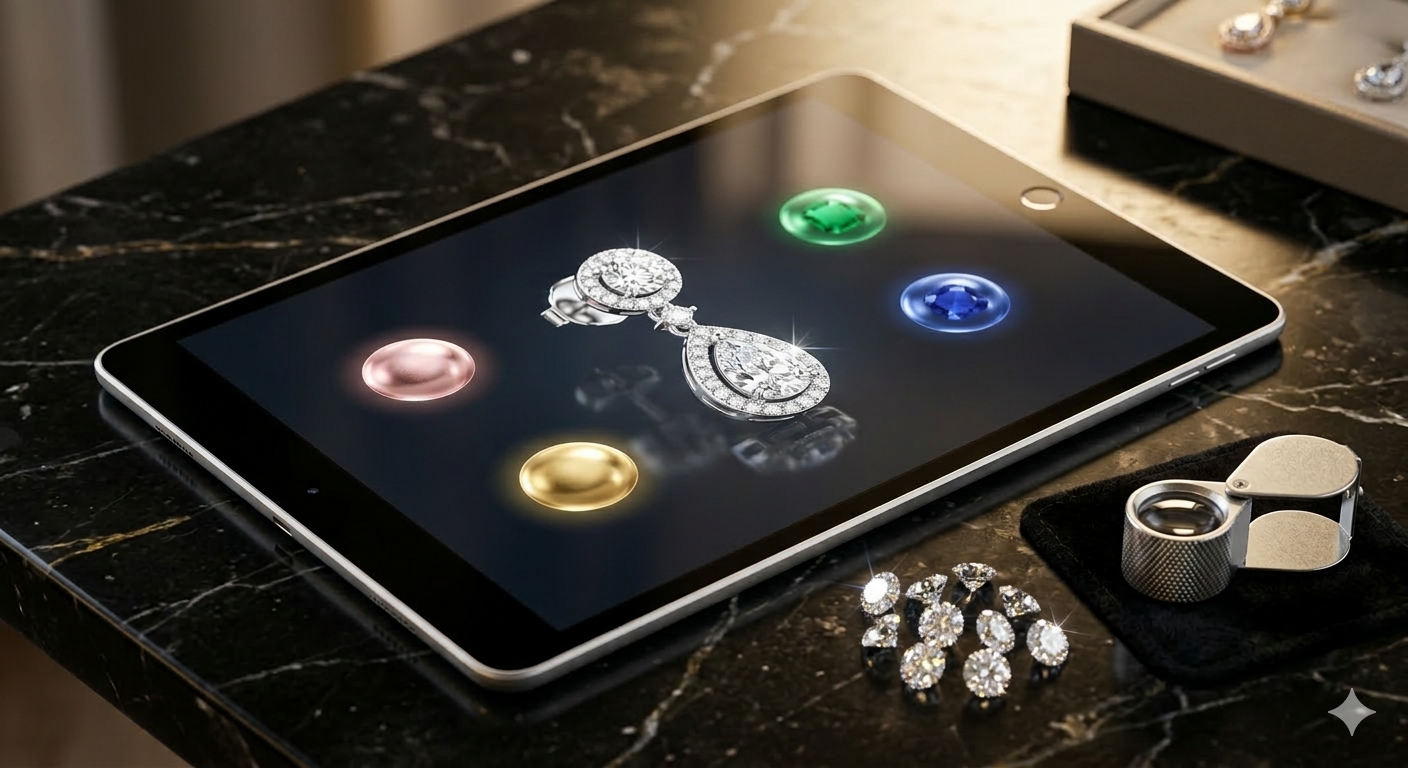
Are you losing potential revenue with static earring listings?
If you sell diamond jewelry online, you already know that engagement rings steal the spotlight.
But here’s what many retailers overlook:
Earrings can become your most profitable and fastest-converting category—when customers can design their own.
So what’s holding you back?
Most jewelry e-commerce platforms still treat earrings like any other product:

Meanwhile, your potential buyers quietly leave — and buy from competitors who offer customization.
Why Custom Earring Builders Outperform Static Listings—By a Wide Margin
Let’s focus on real customer behavior, not just theory.
Why Custom Earring Builder Works So Well
Lower price anxiety: Customers control size, quality, and budget—so they feel confident about what they spend.
Less price comparison: The time they invest in customizing builds emotional commitment, reducing the urge to shop elsewhere.
Higher engagement: Shoppers stay longer, explore more options, and interact deeply with your site.
Strong gifting appeal: Perfect for anniversaries, birthdays, or self-purchases—making it an easy “yes” decision.
Better margins: Smart upselling happens naturally as customers upgrade features during the process.
See It Live At JewelExperts.com
Instead of static listings, tools like 3D Jewel Studio let customers design their own earrings in real time—choosing size, quality, and budget while viewing a live 3D preview. This not only boosts engagement but also builds confidence, reduces price hesitation, and naturally increases conversions and order value.
The Catch Most Retailers Don’t See Coming
Building a “Create Your Earring” feature sounds simple—until you run into the core problem:
You need two perfectly matched diamonds.
And your existing diamond feeds don’t actually provide that.
Check your inventory sources right now—Nivoda, RapNet (now Rapaport Trade), IDEX, VDB.
What you’ll find:
Millions of individual diamonds
Little to no availability of matched pairs at scale
No real guarantee that two stones will look identical in size, color, or brilliance
Why Manual Matching Breaks Down
Most retailers try to solve this manually—but it doesn’t take long before things start falling apart:
Not scalable as your catalog grows
Higher risk of mismatched pairs and costly returns
Slower fulfillment due to manual sourcing and checks
Margins get squeezed with inefficiencies
Operations become messy and hard to manage
This is exactly why most “build-your-own” earring projects fail to deliver results.
How We Solve the Matching Problem (Automatically)
How Matching Is Solved Automatically
Modern systems eliminate the manual effort of pairing diamonds by using intelligent algorithms that work directly with live supplier inventories—ensuring accurate, consistent matches in real time.
Multi-Parameter Matching Logic
Instead of relying only on the 4Cs, advanced matching considers multiple weighted factors, including:
Carat weight (within tight tolerance ranges)
Color consistency (visually aligned, not just graded)
Clarity based on actual inclusion visibility
Cut quality (symmetry, polish, and proportions)
Table %, depth %, and angles
Fluorescence and its visual impact
Intelligent Price Normalization
Even similar diamonds can vary widely in price. To handle this:
Per-carat pricing is normalized
Unusual price gaps are filtered out
Margins are automatically safeguarded
Real-Time Inventory Sync
Matching isn’t static—it adapts live:
Diamond pairs are generated dynamically as customers browse
Selections are reserved during checkout
Inventory stays aligned with real-time supplier availability
This approach ensures customers see well-matched options instantly—while retailers maintain pricing control and operational efficiency.
Customer view: A perfectly matched pair of diamonds
Backend reality: Two intelligently paired single stones sourced from live supplier feeds
No manual effort. No additional inventory. No operational complexity.
What Your Customers Experience
The flow is designed to feel effortless:

Clean. Simple. Confidence-inspiring.
Exactly the kind of experience that turns browsers into buyers.
Experience the full journey:
Try the Shopify demo (Shopify / Shopify Plus)
Try the WooCommerce demo (WordPress stores)
What This Means for Your Business
Based on real implementations, retailers typically see:
Translation: More revenue from the traffic you already have.
What If the Pair Isn’t Perfect?
This is a common—and valid—concern.
In reality:
Matching is done using multiple visual and technical parameters
Buyers can review complete diamond details and certifications up front
Pricing and settings remain fully transparent before checkout
As a result, return rates for custom-built earrings are almost negligible.
Why Most Agencies Struggle to Build This
Creating a front-end interface is easy. Building the system behind it is not.
Most agencies lack a deep understanding of:
Diamond feed API complexities
Jewelry-specific pricing structures
Visual matching beyond just the 4Cs
Supplier limitations and edge cases
Actual buyer behavior in fine jewelry
This is where domain expertise makes the difference.
What a Complete Solution Includes
End-to-end “Build Your Earring” module
Intelligent diamond pairing logic
Margin-safe, dynamic pricing
Mobile-first, conversion-focused interface
Real-time inventory synchronization
Admin controls and performance tracking
Thorough QA, testing, and launch support
Compatibility across platforms like Shopify, WooCommerce, Magento, or custom builds
Ready to Transform Your Earring Sales?
Schedule a Free Strategy Call at +32 460 23 96 44
Email: info@jewelexperts.com
Headquarters: Frankrijklei 5, Antwerp Tower #2.06, Antwerp, Flemish Region 2000, BE
Interesting Reads
Amazing Benefits of 3D Rendering in Jewelry Marketing
What Is the Best Jewelry CAD Software?
Customizing Jewelry with 3D Technology
How Virtual Try Ons can Help You Close More Sales for Your Jewelry Business
Top Benefits of Live Chat for Your Jewelry Website
Why Jewelry Brands Should Use 3D Renders for Social Media Marketing