+32 460 23 96 44

On this page
- Understanding Jewelry Photography
- Advantages of Jewelry Photography
- Authenticity and Trust
- Natural Imperfections
- Brand Storytelling
- Limitations of Jewelry Photography
- High Production Costs
- Limited Scalability
- Difficulty Showing Product Variations
- Understanding 3D Jewelry Rendering
- Advantages of 3D Jewelry Rendering
- Unlimited Product Variations
- Faster Product Launches
- Which Method Actually Sells More Online?
- Rendering Often Performs Best For
- The Hybrid Strategy Most Successful Brands Use
- The Future of Jewelry Product Visualization
- Real-Time 3D Product Configurators
- Augmented Reality Try-On
- Virtual Showrooms
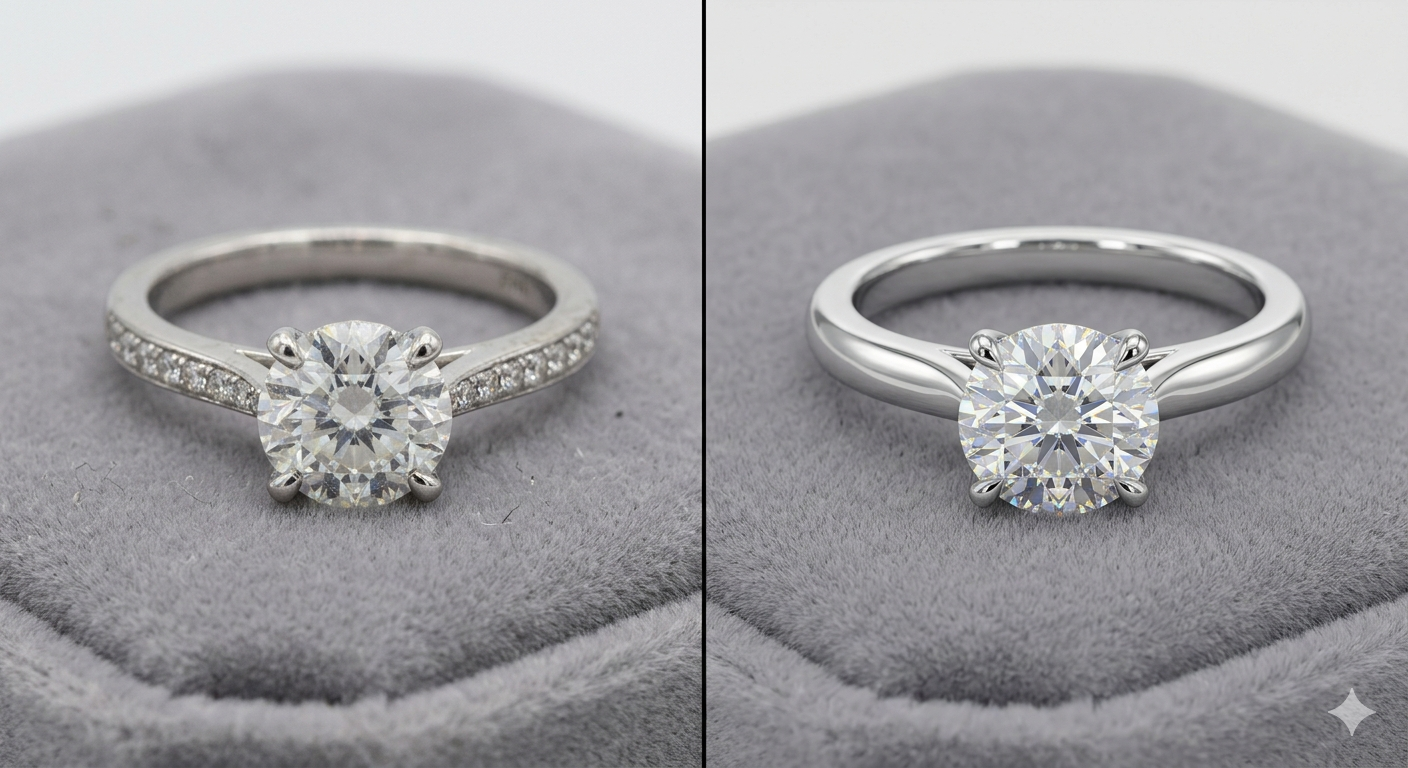
The Visual Battle That Shapes Online Jewelry Sales
In luxury e-commerce, visuals are not just marketing assets—they are the primary sales driver.
Unlike physical stores where customers can touch, try, and inspect jewelry, online shoppers rely almost entirely on product images to evaluate quality, craftsmanship, and value.
This makes product visualization the most critical factor in online jewelry retail.
For decades, professional jewelry photography dominated the industry. High-end macro lenses, precision lighting setups, and expert retouching allowed brands to capture the brilliance of diamonds and the reflective qualities of precious metals.
However, in the last decade, another technology has been gaining momentum: 3D jewelry rendering.
Today, luxury brands, online retailers, and custom jewelry designers are increasingly evaluating an important question:
Which actually sells more online—traditional jewelry photography or photorealistic 3D rendering?
The answer is not as simple as choosing one over the other. Instead, it depends on multiple factors, including cost, scalability, customization, marketing flexibility, and the overall customer experience.
This article explores both approaches from a professional e-commerce and digital visualization perspective.
Understanding Jewelry Photography
Jewelry photography is the traditional method of showcasing products using professional cameras and controlled lighting environments.
A typical high-quality jewelry shoot involves:
Macro photography equipment
Light diffusion techniques
Reflective surface control
Focus stacking
Post-production editing
Jewelry is one of the most difficult product categories to photograph because:
Diamonds refract light in complex ways
Polished metals reflect the surrounding environments
Small imperfections become visible under macro lenses
To overcome these challenges, photographers often use advanced techniques such as:
multi-light setups
polarizing filters
composite image blending
The result can be stunning, authentic product images that convey real material texture and sparkle.
Advantages of Jewelry Photography
Authenticity and Trust
Real product photography communicates authenticity.
Customers see the exact piece of jewelry they are purchasing, which can increase trust—especially for high-value items like engagement rings.
Luxury brands have historically relied on photography to maintain a sense of craftsmanship and exclusivity.
Natural Imperfections
While imperfections might sound negative, subtle irregularities often reinforce the idea that a piece is handcrafted and genuine.
Perfectly polished visuals can sometimes feel artificial, especially to experienced jewelry buyers.
Brand Storytelling
Photography allows brands to integrate jewelry into lifestyle contexts.
For example:
rings photographed on real hands
necklaces worn by models
bracelets in editorial settings
These lifestyle images help customers imagine how the jewelry fits into their lives.
Limitations of Jewelry Photography
Despite its strengths, photography introduces several challenges for modern e-commerce.
High Production Costs
Professional jewelry photography can be extremely expensive.
Costs may include:
studio rental
specialized lighting equipment
photographer fees
post-production editing
reshoots for new product angles
For brands with hundreds or thousands of SKUs, this becomes a significant operational expense.
Limited Scalability
Photography requires the physical product to exist before images can be captured.
This creates delays when:
launching new collections
marketing custom designs
updating product variations
In fast-moving digital markets, these delays can slow down product releases.
Difficulty Showing Product Variations
Jewelry often comes in multiple variations:
metal colors
gemstone sizes
diamond grades
customization options
Photographing every possible combination quickly becomes impractical.
Understanding 3D Jewelry Rendering
3D jewelry rendering uses computer-generated imagery (CGI) to produce photorealistic images based on digital models.
The process usually involves:
Creating a CAD model of the jewelry piece
Applying realistic metal and gemstone materials
Simulating studio lighting conditions
Rendering the final high-resolution image
Modern rendering software uses advanced techniques such as:
ray tracing
physically based rendering
optical light simulation
These technologies replicate the way light interacts with diamonds, gemstones, and polished metals.
The result can be images that are visually indistinguishable from traditional photography.
Advantages of 3D Jewelry Rendering
Unlimited Product Variations
One of the biggest advantages of rendering is the ability to generate infinite variations of a design.
From a single digital model, brands can easily create versions in:
yellow gold
white gold
rose gold
platinum
Gemstones can also be swapped instantly.
This flexibility is particularly valuable for custom jewelry businesses.
Faster Product Launches
Rendering allows companies to create product images before manufacturing begins.
This means marketing teams can prepare:
website listings
promotional campaigns
social media content
without waiting for the final physical product.
Perfect Visual Consistency
Because rendering uses controlled digital environments, every image can maintain:
identical lighting
consistent reflections
uniform shadows
This creates a clean, luxury e-commerce aesthetic that is difficult to achieve with traditional photography alone.
Enhanced Customer Visualization
3D models enable features that photography cannot easily provide.
Examples include:
360-degree product views
zoomable gemstone details
interactive customization tools
These tools allow customers to examine jewelry from multiple perspectives, improving purchase confidence.
Which Method Actually Sells More Online?
The question most jewelry brands ask is simple:
Which visualization method increases conversions?
Research across e-commerce industries consistently shows that high-quality visuals significantly influence purchasing decisions.
In many cases, the winning strategy is not choosing one method over the other—but using them strategically.
Photography Often Performs Best For
hero product images
lifestyle campaigns
editorial brand storytelling
social media marketing
These scenarios benefit from real-world context and emotional storytelling.
Rendering Often Performs Best For
product catalog images
customization tools
large product collections
rapid product launches
Rendering excels where scalability and consistency are essential.
The Hybrid Strategy Most Successful Brands Use
Many successful jewelry companies now use a hybrid visualization approach.
This combines:
3D rendering for product catalogs
and
photography for brand storytelling
For example:
Product pages may use rendered images
Advertising campaigns may feature photographed lifestyle imagery
This strategy balances efficiency and authenticity.
The Future of Jewelry Product Visualization
The future of online jewelry sales will likely involve even more advanced visualization technologies.
Emerging trends include:
Real-Time 3D Product Configurators
Customers can design rings and instantly see changes in metal type, gemstones, and settings.
Augmented Reality Try-On
Shoppers preview jewelry on their hands or neck using smartphone cameras.
Virtual Showrooms
Brands create immersive digital environments to display entire collections.
These innovations depend heavily on high-quality digital models and rendering technology.
Final Thoughts
The debate between jewelry photography and 3D rendering is not about replacing one with the other.
Instead, it reflects a broader shift in how jewelry brands operate in a digital marketplace.
Traditional photography remains powerful for storytelling and brand identity.
3D rendering introduces scalability, flexibility, and advanced customer experiences that modern e-commerce increasingly requires.
For jewelry businesses navigating online retail, the most effective strategy often combines both approaches—leveraging the strengths of each to create compelling visual experiences for customers.