 +32 460 23 96 44

On this page
- The Growing Importance of CAD/CAM in Jewelry Businesses
- The jewelry industry, valued at over $340 billion globally in 2024, is evolving at lightning speed. Consumers are not just looking for beautiful designs; they demand personalized experiences, faster delivery, and transparency. For jewelers, meeting these expectations while staying profitable is a challenge.
- CAD/CAM addresses these challenges by combining technology and artistry. According to a recent market survey, jewelers using CAD/CAM reported:
- 30–50% faster production cycles
- 20–40% reduction in operational costs
- Higher customer satisfaction due to improved design previews
- These aren’t just numbers—they represent a competitive edge in a market where speed, quality, and innovation are non-negotiable.
- What is CAD/CAM in Jewelry Making?
- Why Jewelers Are Turning to CAD/CAM
- Real Examples of Jewelers Using CAD/CAM to Save Time & Money
- 1. Boutique Jewelers Offering Custom Engagement Rings
- 2. High-Volume Manufacturers in India
- 3. Italian Luxury Jewelry Houses
- 4. U.S.-Based Retail Jewelers
- 💡 Case in Point:A jeweler in London’s Hatton Garden reduced their average design approval time from 10 days to just 2 days using CAD. Clients were impressed with the digital renders, leading to quicker decision-making.
- How CAD/CAM Saves Money in Jewelry Production
- Less Material Waste
- Lower Labor Costs
- Fewer Redesigns
- Scalability
- How CAD/CAM Saves Money in Jewelry Production
- Less Material Waste
- Lower Labor Costs
- Fewer Redesigns
- Scalability
- How CAD/CAM Saves Time for Jewelers
- The Role of 3D Rendering in Enhancing CAD/CAM
- The Smart Jeweler’s Path Forward
The Jewelry Industry’s Digital Revolution
For centuries, jewelry has been associated with craftsmanship, artistry, and painstaking hours at the workbench. But in today’s competitive landscape, where speed, customization, and cost efficiency matter as much as beauty, traditional methods alone no longer cut it.
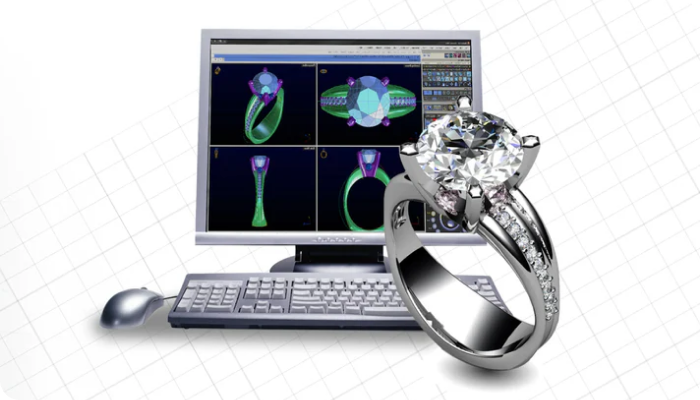
This is where CAD (Computer-Aided Design) and CAM (Computer-Aided Manufacturing) come into play. These smart design and production tools are not just technical upgrades—they are reshaping how jewelers operate, unlocking new levels of efficiency, creativity, and profitability.
From boutique designers in Antwerp and New York to high-volume manufacturers in India and Italy, jewelers worldwide are embracing CAD/CAM to:
Cut production costs
Save valuable time
Offer personalized designs on demand
Reduce errors and material wastage
Scale their businesses more profitably
In this blog, we’ll explore exactly how CAD/CAM is helping jewelers save time and money, with real examples and case studies to prove its impact.
The Growing Importance of CAD/CAM in Jewelry Businesses
The jewelry industry, valued at over $340 billion globally in 2024, is evolving at lightning speed. Consumers are not just looking for beautiful designs; they demand personalized experiences, faster delivery, and transparency. For jewelers, meeting these expectations while staying profitable is a challenge.
CAD/CAM addresses these challenges by combining technology and artistry. According to a recent market survey, jewelers using CAD/CAM reported:
30–50% faster production cycles
20–40% reduction in operational costs
Higher customer satisfaction due to improved design previews
These aren’t just numbers—they represent a competitive edge in a market where speed, quality, and innovation are non-negotiable.
What is CAD/CAM in Jewelry Making?
Before diving into success stories, let’s clarify the basics.
CAD (Computer-Aided Design): CAD software allows jewelers to create detailed 2D or 3D models of jewelry pieces digitally. Programs like MatrixGold, RhinoGold, JewelCAD, and AutoDesk Fusion 360 are widely used in the industry.
CAM (Computer-Aided Manufacturing): Once the CAD design is finalized, CAM tools convert it into instructions for machinery, often 3D printers or CNC milling machines, which produce wax or resin prototypes for casting.
Together, CAD/CAM bridges artistry with precision technology. Jewelers no longer need to carve wax models by hand—a process that could take days. Instead, they can digitally design, visualize, and produce pieces with speed and accuracy.
Why Jewelers Are Turning to CAD/CAM
The shift towards CAD/CAM isn’t just about technology—it’s about business survival and growth. Global jewelry consumers are demanding customization, quick delivery, and sustainable practices, and CAD/CAM helps meet these demands.
Key benefits include:
Faster Time-to-Market: What once took weeks can now be completed in days.
Reduced Costs: Less manual labor, fewer errors, and lower material waste.
Personalization at Scale: Clients can preview designs in 3D before production.
Precision & Quality: Every detail, from diamond settings to engravings, is more accurate.
Higher Profit Margins: More efficiency means greater profitability.
Now, let’s see how real jewelers are reaping these benefits.
Real Examples of Jewelers Using CAD/CAM to Save Time & Money
1. Boutique Jewelers Offering Custom Engagement Rings
In Antwerp, a leading diamond hub, many small jewelers traditionally relied on hand-carved wax models for engagement rings. A single design iteration could take 7–10 days.
By switching to MatrixGold CAD software, these jewelers now:
Generate digital prototypes in hours instead of days.
Share 3D renders with clients instantly via email or WhatsApp.
Save an average of €500–€1,000 per month on material waste and manual modeling.
Clients love the transparency, while jewelers love the faster closing rates.
2. High-Volume Manufacturers in India
Manufacturers in Surat and Mumbai, producing thousands of diamond jewelry pieces monthly, have adopted CAD/CAM with 3D printing and CNC machines.
Impact:
Reduced prototyping costs by 40%.
Increased production capacity by 25% without hiring extra artisans.
Standardized quality across thousands of units.
This efficiency allows them to compete globally with lower prices while maintaining high craftsmanship standards.
3. Italian Luxury Jewelry Houses
Famous for intricate gold designs, Italian luxury jewelers once depended on skilled artisans for filigree and custom motifs. Now, they use CAD/CAM integrated with 3D rendering technology.
Result:
Ability to experiment with complex designs virtually without wasting gold.
Reduced design-to-market time by nearly 50%.
Increased profits as more innovative designs attract global buyers.
4. U.S.-Based Retail Jewelers
Retail jewelers in the U.S. face the challenge of competing with online giants like Blue Nile and James Allen. By implementing CAD/CAM with customer-facing design kiosks, they’ve transformed their stores.
Example:
Customers can sit with a jeweler, design their piece on CAD software, and view a photorealistic 3D rendering before ordering.
Jewelers avoid multiple redesigns, saving time and labor costs.
Many report 20–30% higher customer satisfaction and faster conversions.
💡 Case in Point:A jeweler in London’s Hatton Garden reduced their average design approval time from 10 days to just 2 days using CAD. Clients were impressed with the digital renders, leading to quicker decision-making.
How CAD/CAM Saves Money in Jewelry Production
Less Material Waste
Traditional handcrafting often leads to scrap gold, broken wax models, or failed castings. CAD/CAM reduces these risks by creating precise digital models and accurate prototypes.
Lower Labor Costs
Instead of hiring multiple artisans for wax carving, jewelers can rely on one CAD designer and one CAM operator. Labor efficiency = direct cost savings.
Fewer Redesigns
Because customers preview designs in 3D, fewer pieces are rejected post-production. This saves both money and reputation.
Scalability
For growing jewelry businesses, CAD/CAM makes it easier to handle bulk orders without proportionally increasing costs.
How CAD/CAM Saves Money in Jewelry Production
Less Material Waste
Traditional handcrafting often leads to scrap gold, broken wax models, or failed castings. CAD/CAM reduces these risks by creating precise digital models and accurate prototypes.
Lower Labor Costs
Instead of hiring multiple artisans for wax carving, jewelers can rely on one CAD designer and one CAM operator. Labor efficiency = direct cost savings.
Fewer Redesigns
Because customers preview designs in 3D, fewer pieces are rejected post-production. This saves both money and reputation.
Scalability
For growing jewelry businesses, CAD/CAM makes it easier to handle bulk orders without proportionally increasing costs.
How CAD/CAM Saves Time for Jewelers
Instant Visualization: Jewelers and clients see real-time design changes.
Faster Prototyping: What took weeks can now be done in 24–48 hours.
Quick Iterations: Modify a digital file in minutes instead of restarting a wax model.
Streamlined Workflow: From design to casting, every step is digitally connected.
The Role of 3D Rendering in Enhancing CAD/CAM
3D rendering adds another layer of advantage. Using tools like KeyShot or V-Ray, jewelers can create hyper-realistic images of CAD models.
Benefits include:
Use renders for online catalogs without needing physical photography.
Showcase designs to clients before production, reducing risks.
Market products on social media faster, boosting sales velocity.
The Smart Jeweler’s Path Forward
The jewelry industry is no longer about choosing between tradition and technology—it’s about combining both. CAD/CAM empowers jewelers to deliver faster, reduce costs, delight customers, and stay profitable in a highly competitive marketplace.
Real-world examples—from small boutique jewelers in Antwerp to large-scale manufacturers in India—prove that CAD/CAM is more than just a tool; it’s a game-changer.
The future belongs to jewelers who embrace smart design tools, digital workflows, and sustainable practices. If you’re ready to save time, cut costs, and boost profits, now is the time to integrate CAD/CAM into your business.
✨ Your craftsmanship deserves the support of smart technology—because the future of jewelry is not just handcrafted, but smartly crafted.
Interesting Reads
Amazing Benefits of 3D Rendering in Jewelry Marketing
What are some tips for creating stunning 3D jewelry renderings?
How to Create 3D Models for Jewelry Design: Best Practices
Top Techniques for High-Quality Jewelry Renderings
Creating Photorealistic Jewelry Renders: Tips and Tricks
Customizing Jewelry with 3D Technology: A Game-Changer for Your Brand



.png)