+32 460 23 96 44

On this page
- What is 3D Product Rendering?
- Common Uses of Product Photography:
- The Difference Between 3D Jewelry Rendering and Photography.
- 1. Cost Considerations
- Long-Term Savings
- 2. Quality and Realism
- Visual Detail and Accuracy
- Technological Advancements
- Customer Perception
- 3. Time and Efficiency
- Making Updates and Changes
- Large-Scale Projects
- Which Option Is Right for You?
- Choose Photography if:
- Conclusion: A Hybrid Approach
- Book a Consultation for 3D Jewelry Modeling
In today’s digital landscape, high-quality visuals play a crucial role in marketing. Whether you run an e-commerce store, work in architecture, or own a business, compelling visuals can significantly enhance your brand’s appeal. The two primary methods for producing such visuals are 3D jewelry rendering and traditional product photography. While both methods have their strengths, choosing the right one depends on your goals, budget, and brand identity.
This blog explores the advantages and disadvantages of both approaches, helping you make an informed decision for your business needs.
What is 3D Product Rendering?
.png "What is 3D Product Rendering?")
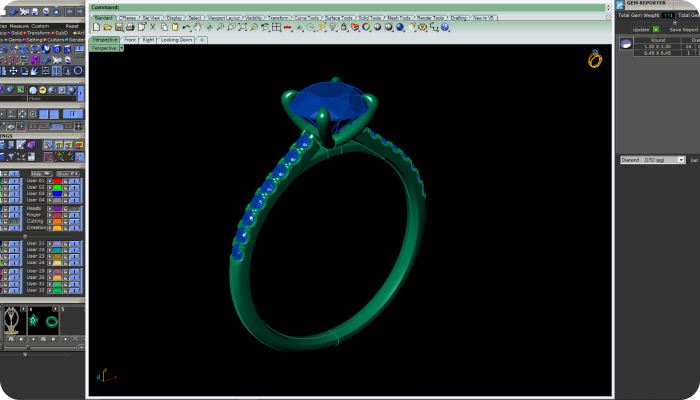
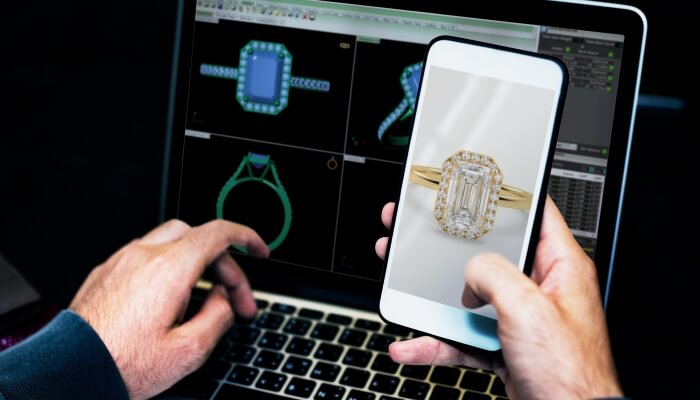
3D Jewelry rendering is a digital process that involves creating lifelike images using specialized software. Instead of photographing a physical product, designers build a virtual model that can be displayed from any angle and in various environments. Jewelry Rendering is becoming increasingly popular due to its flexibility and efficiency.
Key Steps in 3D Rendering
Modeling: Designers use software like Blender, 3ds Max, or Maya to create a detailed 3D model of the product.
Texturing: Colors, materials, and textures are applied to enhance the realism of the model.
Lighting & Rendering: Advanced lighting effects are added, and rendering engines like V-Ray or Corona generate high-quality images.
Post-Processing: Editing tools, such as Photoshop, refine the renders to ensure they meet professional standards.
Common Uses of 3D Rendering:
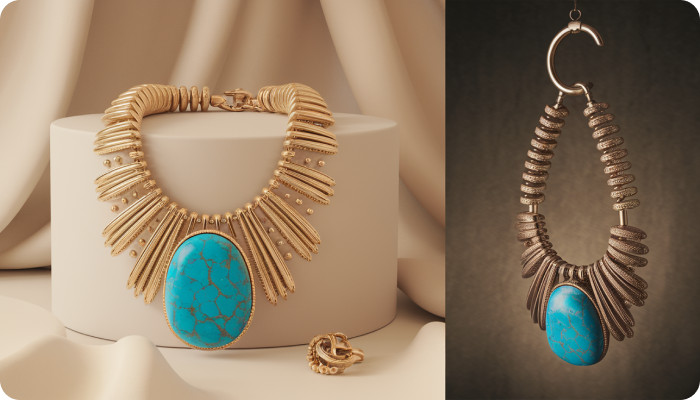
3D jewelry rendering allows jewelers to create realistic digital models of their designs before production. This is useful for custom orders, as clients can visualize their jewelry from different angles and request modifications without physical prototypes. Rendered images are also used in online stores and marketing campaigns, providing a lifelike representation of jewelry pieces, especially for new collections or made-to-order designs that haven’t been physically produced yet.
What is Product Photography?
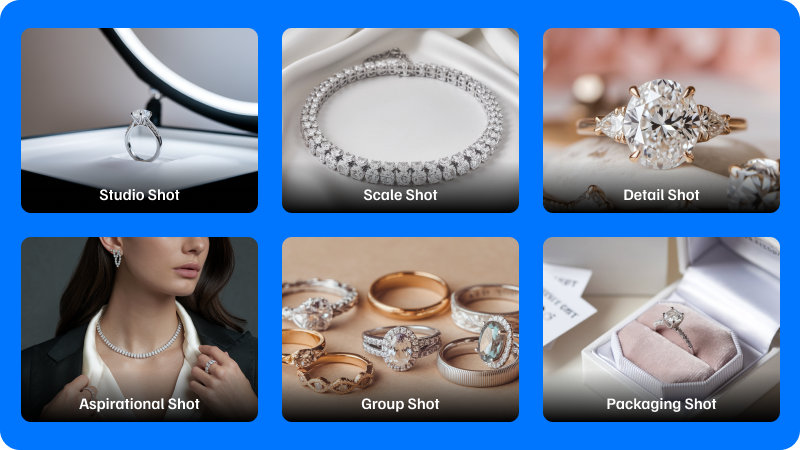
Product photography involves capturing real images of a physical product using cameras, lighting setups, and professional techniques. This method provides an authentic representation of the product, making it ideal for brands that emphasize real-world appeal.
Key Steps in Product Photography:
Preparation: Cleaning and setting up the product.
Setup: Arrange lighting, backdrops, and necessary equipment to create the perfect shot.
Shooting: Capturing the product from multiple angles using high-quality cameras.
Post-Processing: Editing the images in software like Adobe Photoshop to enhance details and correct imperfections.
Common Uses of Product Photography:
Product photography is essential for showcasing jewelry pieces in their true form, capturing fine details like gemstone cuts, metal textures, and intricate designs. High-quality images are used on e-commerce websites, social media, and marketing materials to help customers see the craftsmanship before making a purchase. Photography also plays a key role in catalogs, advertisements, and in-store displays, where clarity and lighting highlight the brilliance of each piece.
The Difference Between 3D Jewelry Rendering and Photography.

When deciding between 3D rendering and traditional photography for product visuals, several factors come into play. These include cost, flexibility, time efficiency, and the level of detail required. Each method has its strengths, and the right choice depends on your business needs and budget. Below, we explore these factors in detail to help you make an informed decision.
1. Cost Considerations
Initial and Ongoing Costs
3D rendering requires an upfront investment in specialized software and skilled professionals who can create realistic models. However, once the setup is complete, ongoing costs remain relatively low, mainly for software updates and occasional adjustments.
Traditional photography, on the other hand, involves costs for physical prototypes, a studio, professional photographers, and repeated photoshoots. While the initial expenses may be lower than setting up a 3D rendering system, ongoing costs can add up, especially if frequent updates are needed.
Long-Term Savings
For businesses with regularly changing product lines, 3D rendering can be a cost-effective option. Once a digital model is created, it can be modified and reused for future marketing needs, reducing the need for repeated investments.
In contrast, traditional photography requires a new photoshoot each time a product changes or a new version is introduced, which can increase long-term expenses.
When Each Method is More Cost-Effective
3D rendering is ideal for industries that require multiple variations of a product, such as furniture, real estate, and e-commerce. It allows for easy customization without producing and photographing each variation.
Traditional photography may be more suitable for businesses with a small and stable product range, such as luxury watches or handmade jewelry. In these cases, high-quality photographs can highlight craftsmanship and details without frequent updates.
2. Quality and Realism
Visual Detail and Accuracy
Photography captures real-world details naturally, making it an excellent choice for showcasing intricate textures, materials, and craftsmanship. This authenticity can be important for products where customers expect a true-to-life representation.
3D rendering has advanced significantly and can now produce highly realistic images. Rendering software allows for precise control over lighting, shadows, and materials, often creating images that look just as polished as professional photographs. Additionally, imperfections can be corrected easily without reshooting.
Technological Advancements
Recent developments in rendering technology, such as ray tracing and AI-driven enhancements, have improved the realism of 3D images. These technologies help simulate natural lighting and reflections, making rendered images nearly indistinguishable from photographs.
Customer Perception
High-quality visuals influence purchasing decisions. Traditional photography offers a sense of authenticity, which can build trust with customers. However, 3D rendering provides greater flexibility, allowing businesses to showcase products in multiple environments and angles. Some industries use a combination of both to balance realism with creative flexibility.
3. Time and Efficiency
Time Required for Creation
Photography involves setting up a studio, arranging lighting, and conducting a photoshoot, which can take hours or even days, especially for large-scale projects.
In contrast, creating a 3D model requires an initial time investment, but once completed, generating multiple images from different angles is quick and efficient. Adjustments to color, lighting, or background can be made instantly without requiring a reshoot.
Making Updates and Changes
One of the biggest advantages of 3D jewelry rendering is the ease of making changes. In photography, even minor modifications often require another photoshoot, which can be costly and time-consuming. With 3D rendering, updates can be made within the software, allowing for rapid adjustments and quick turnaround times.
Large-Scale Projects
For businesses with extensive product catalogs, 3D rendering is a practical solution. Traditional photography can become logistically complex and expensive when handling a large number of products. Coordinating schedules, transporting items, and maintaining consistent lighting across different shoots can be challenging.
With 3D rendering, a single digital model can be used to create multiple variations, ensuring consistency in product visuals. This makes it a suitable choice for businesses that require a large volume of images for websites, catalogs, and marketing materials.
3D Rendering vs. Traditional Photography
Both 3D rendering and photography have their advantages. Here’s a comparison of the two:
Which Option Is Right for You?
The choice between 3D jewelry rendering and photography depends on your business needs. Here’s a quick guide:
Choose 3D Rendering if:
✔ You have a large product catalog with multiple variations.
✔ Your products are complex or not yet manufactured.
✔ You require high flexibility and frequent updates.
✔ You want to create consistent and scalable visuals for marketing.
Choose Photography if:
✔ You have a small product range with minimal updates.
✔ Authenticity and real-world texture are crucial to your brand identity.
✔ Your products rely on fine details and natural lighting effects.
✔ You want images that immediately connect with customers on an emotional level.
Conclusion: A Hybrid Approach
For many businesses, a combination of 3D rendering and photography is the best solution. Use 3D rendering for efficiency, flexibility, and scalability, while relying on traditional photography for authenticity and tactile appeal.
By carefully considering your budget, industry, and target audience, you can choose the most effective visual strategy to elevate your brand. Whether you invest in photorealistic 3D renders or high-quality photography, the key is to create visuals that tell a compelling story and engage your audience.
Want help with your visuals? Contact JewelExperts.com today to transform your products into attractive imagery!
Read more: Top Techniques for High-Quality Jewelry Renderings
Book a Consultation for 3D Jewelry Modeling

JewelExperts.com specializes in creating high-quality visuals that bring your jewelry to life. Our team of 3D jewelry design professionals pays close attention to every detail, from the sparkle of a diamond to the intricate design of a setting. Whether you're a jeweler looking to enhance your online store or a brand aiming for eye-catching marketing visuals, JewelExperts.com offers tailored solutions to meet your needs. Our expertise helps businesses showcase their products in the best light, making them more appealing to customers. Let JewelExperts.com turn your vision into reality with stunning imagery that stands out