+32 460 23 96 44

On this page
- The Real Role of Features in Jewelry eCommerce
- Product Visualization That Feels Real
- Customization That Reduces Decision Anxiety
- A Guided Buying Experience
- Trust Signals That Remove Doubt
- Mobile Experience That Feels Effortless
- Speed That Keeps Users Engaged
- Clear Pricing and Transparency
- Strong Product Storytelling
- What We’ve Learned from Real Jewelry Brands
- Why JewelExperts.com
Most jewelry websites don’t fail because of bad products.
They fail because the website doesn’t convert visitors into buyers.
You can drive traffic through SEO or ads, but if users don’t feel confident, engaged, or guided — they leave without buying.
And in jewelry eCommerce, this matters even more.
You’re not selling a low-cost product. You’re selling something emotional, valuable, and often symbolic. That means your website needs to do more than just display products — it needs to build trust, reduce hesitation, and guide decisions.
From our experience at JewelExperts.com, small improvements in website features can make a significant difference to conversion rates.
This guide focuses on the features that actually move the needle — not the ones that just look impressive.
The Real Role of Features in Jewelry eCommerce
Before we jump into specific features, it’s important to understand something:
Features don’t increase conversions on their own.
They work when they solve user doubts at the right moment.
Most visitors come with questions in their minds:
“Is this diamond real?”
“Will this look good on me?”
“Can I trust this brand?”
“What if I choose the wrong design?”
Every high-converting jewelry website is built to answer these questions — sometimes even before the user asks them.
Product Visualization That Feels Real
One of the biggest gaps in most jewelry websites is how products are presented.
Static images are no longer enough.
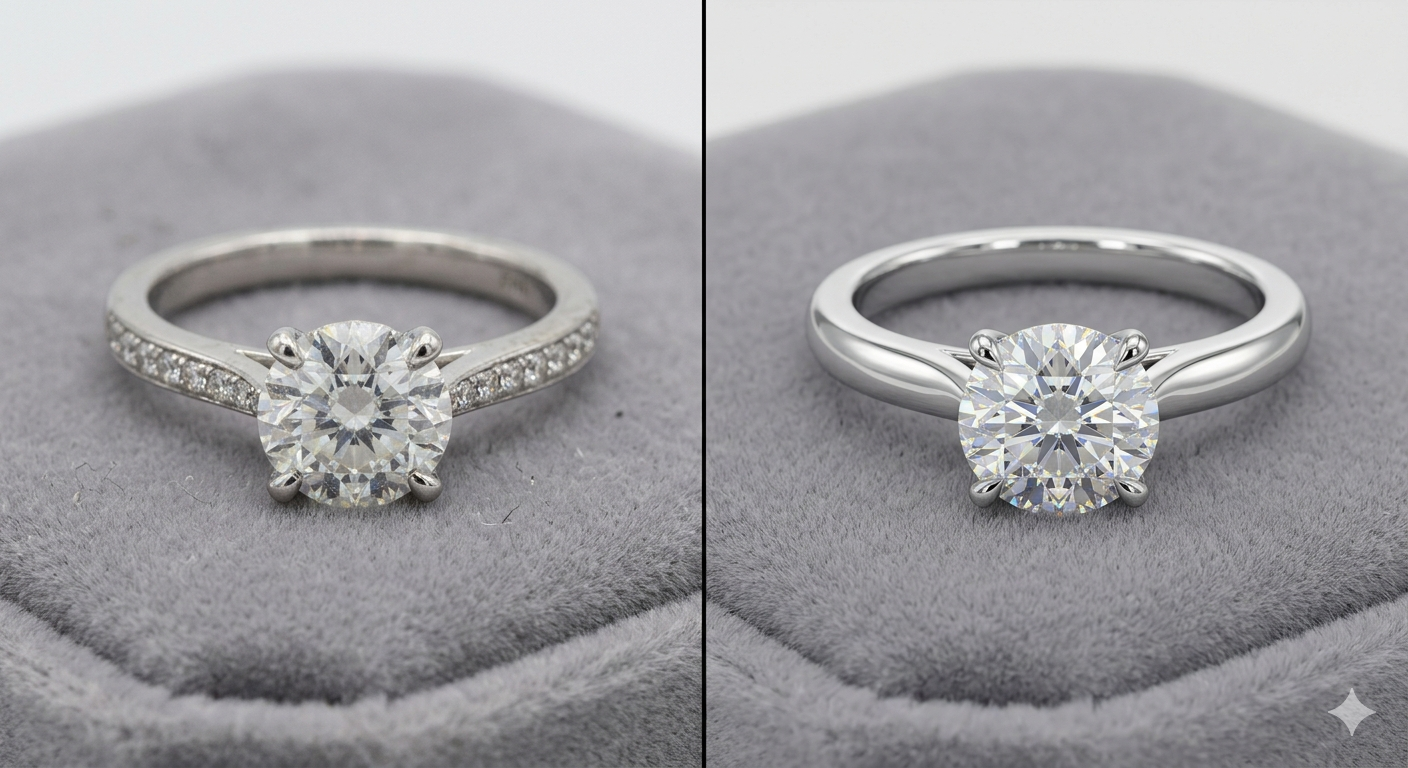
Users want to see details, angles, shine, and proportions. When they can’t, uncertainty increases — and so does drop-off.
That’s why advanced visualization has become one of the most powerful conversion drivers.
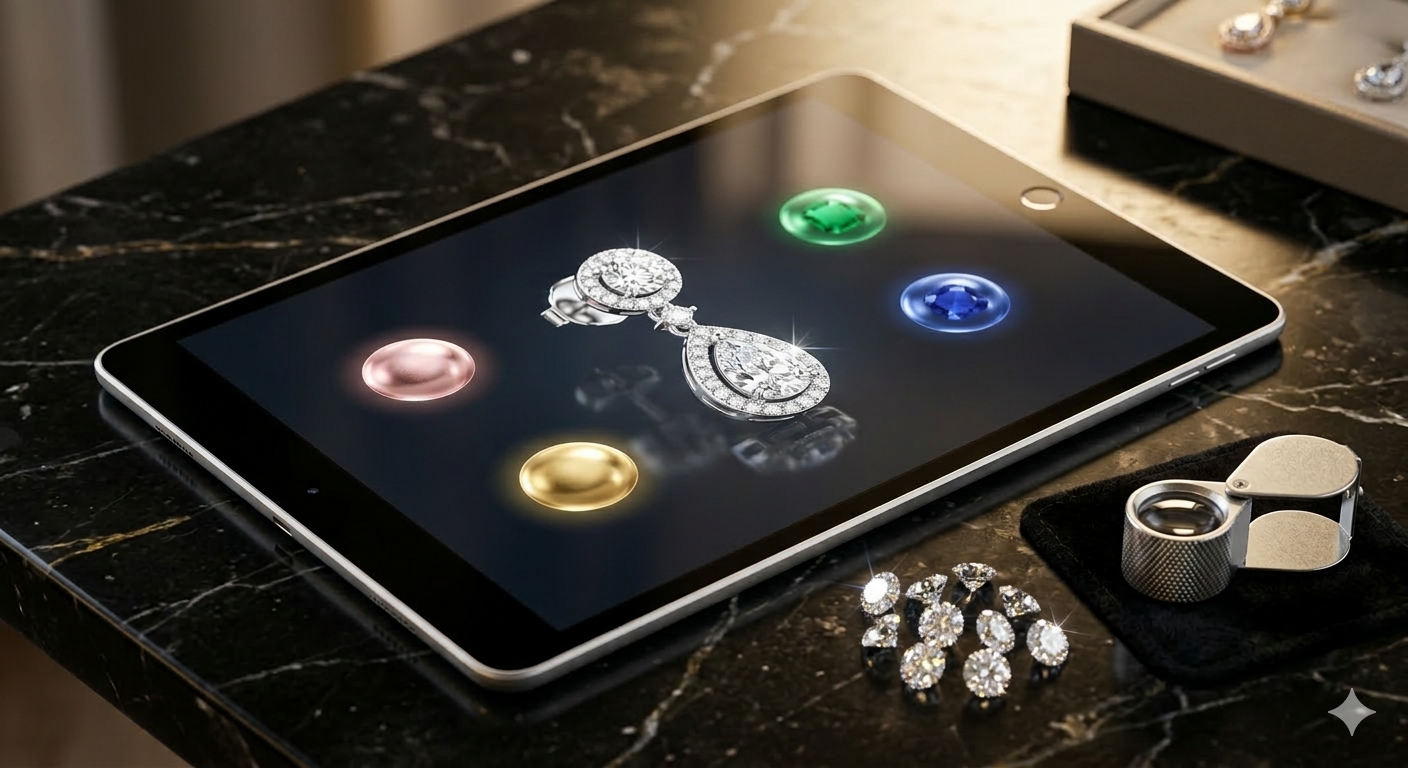
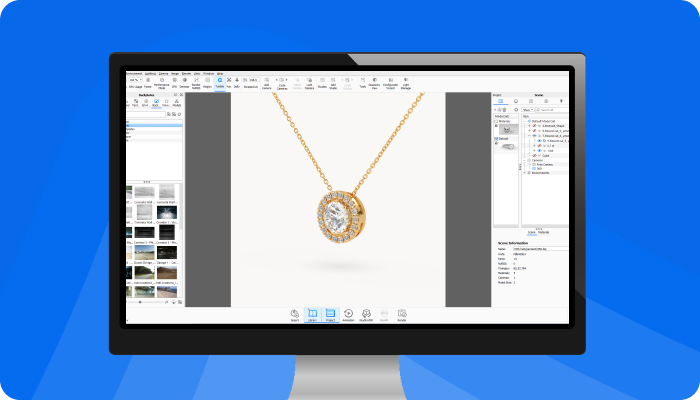
High-quality images, zoom functionality, and 360-degree views allow users to explore products more confidently. Some brands go further with 3D visualization, giving users a near-physical experience online.
The impact is simple:
When users can “feel” the product visually, they are far more likely to trust it.
Customization That Reduces Decision Anxiety
Jewelry buying is rarely straightforward.
Especially in categories like engagement rings, users often feel unsure about what to choose. They want control, but they also need guidance.
This is where customization features become powerful.
Allowing users to select stones, metals, and settings gives them a sense of ownership. It transforms the experience from buying to creating.
But the real value is psychological.
Instead of wondering, “Is this the right ring?”, users start thinking, “This is my ring.”
That shift alone can significantly increase conversions.
A Guided Buying Experience
One of the most overlooked aspects of jewelry websites is guidance.
Most websites assume users know what they want. In reality, many don’t.
A high-converting website doesn’t just show options — it helps users choose.
This can be done through structured navigation, smart filters, or step-by-step flows that simplify complex decisions.
For example, instead of showing hundreds of products at once, a guided flow might start with a simple question like “Who are you shopping for?” and gradually narrow down options.
This reduces overwhelm and keeps users moving forward.
Trust Signals That Remove Doubt
Trust is everything in jewelry eCommerce.
Users are often spending a significant amount of money, and any uncertainty can stop them from completing the purchase.
That’s why trust signals are not optional — they are essential.
Things like certifications, clear product details, return policies, and secure payment indicators all play a role.
But what makes the biggest difference is how clearly and confidently this information is presented.
If users have to search for it, it loses impact.
If it’s visible at the right moment, it builds confidence instantly.
Mobile Experience That Feels Effortless
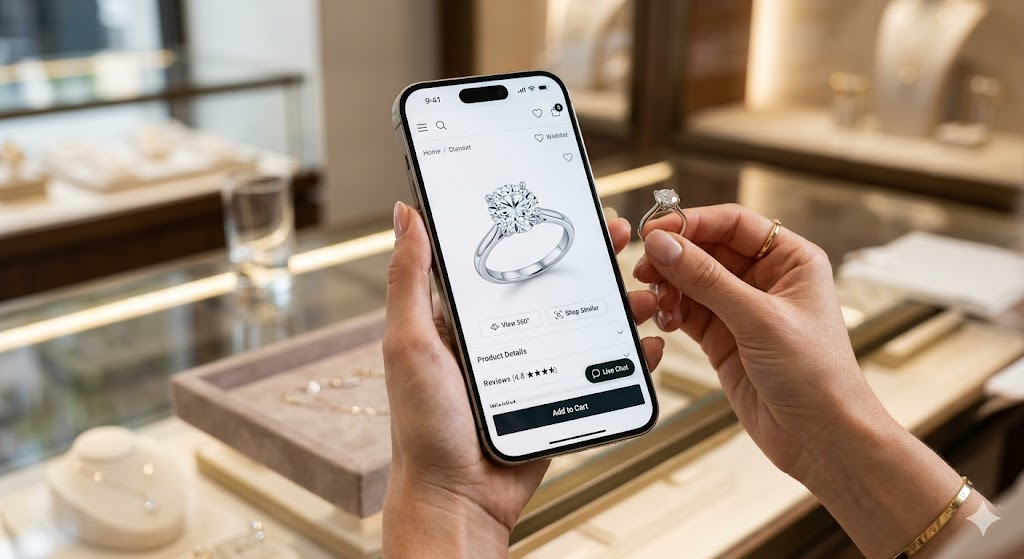
A large portion of users will visit your website on mobile devices.
If the experience feels slow, cluttered, or difficult to navigate, they won’t stay long.
In jewelry eCommerce, mobile optimization is not just about responsiveness. It’s about simplicity.
Buttons need to be easy to tap. Images need to load quickly without losing quality. Navigation needs to feel intuitive.
When everything works smoothly, users focus on the product instead of struggling with the interface.
Speed That Keeps Users Engaged
Speed is often underestimated, but it has a direct impact on conversions.
Jewelry websites tend to be heavy because of high-quality images and visual elements. Without proper optimization, this can slow down the site.
And when a website is slow, users don’t wait — they leave.
Even a small delay can reduce engagement and increase bounce rates.
Fast-loading pages create a smoother experience and keep users moving through the buying journey.
Clear Pricing and Transparency
One of the fastest ways to lose a potential customer is confusion around pricing.
Jewelry pricing can be complex, especially when customization is involved. But that doesn’t mean it should feel unclear.
Users should always know:
What they are paying for
What affects the price
What options are available
When pricing is transparent, trust increases. When it feels hidden or confusing, hesitation grows.
Strong Product Storytelling
Jewelry is not just about specifications. It’s about meaning.
A ring is not just a product — it represents a moment, a commitment, or a memory.
Websites that focus only on technical details often miss this emotional aspect.
High-converting websites balance both.
They provide clear product information, but they also tell a story. They help users imagine the moment associated with the purchase.
This emotional connection can be a powerful driver of conversions.
Seamless Checkout Experience
Even when users decide to buy, the journey isn’t over.
A complicated checkout process can still cause drop-offs.
A good checkout experience feels simple and predictable. Users should be able to complete their purchase without confusion or unnecessary steps.
Guest checkout, multiple payment options, and clear progress indicators all help reduce friction.
The goal is to make the final step feel easy and secure.
What We’ve Learned from Real Jewelry Brands
Across multiple projects, one pattern stands out:
The websites that convert best are not the ones with the most features — they are the ones where every feature serves a purpose.
Adding more elements doesn’t always improve performance. In fact, it can create a distraction.
What works is clarity.
When users understand what they are looking at, feel confident in their choices, and trust the brand, conversions follow naturally.
Why JewelExperts.com
At JewelExperts.com, our approach is not about adding features for the sake of it.
It’s about understanding how users behave and designing experiences that guide them effectively.
Every feature we implement is evaluated based on one question:
Does this help the user move closer to a decision?
That’s what allows us to build jewelry websites that don’t just look good — they perform.
Read More
Make Shopping Easy: Tips for a Better Jewelry Website Experience
How to Choose the Right Web Development Agency for Your Business
Creating a Jewelry Website – Factors to Consider for an eCommerce Jewelry Website
Conclusion
The difference between an average jewelry website and a high-converting one is not design alone.
It’s how well the website understands the user.
Features like visualization, customization, guidance, and trust signals all play a role. But their real power comes from how they are used together.
If your website can reduce doubt, build confidence, and create a smooth buying experience, conversions will naturally follow.