 +32 460 23 96 44

On this page
- What is 3D Jewelry Rendering?
- What is 3D Modeling?
- Key Differences Between 3D Modeling and Rendering
- Benefits of 3D Jewelry Rendering
- For Jewelry Brands and Businesses
- For Customers
- What Are 3D/CAD Files in Jewelry Rendering?
- How is 3D Jewelry Rendering Created?
- Use Cases of 3D Jewelry Rendering
- Conclusion
- Create realistic rendering for your business!!
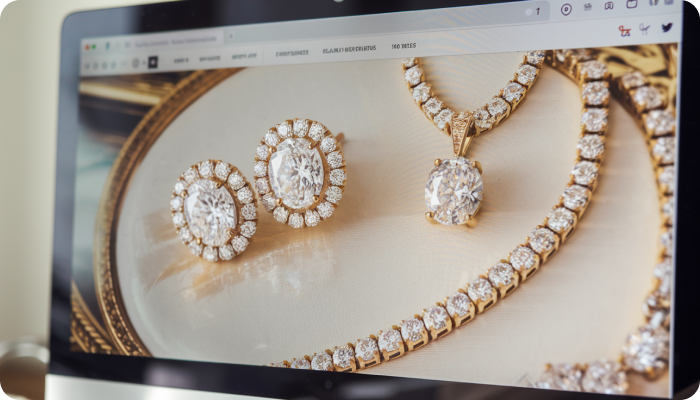
Jewelry design has evolved significantly with the introduction of 3D jewelry rendering, a process that enables designers and customers to visualize pieces in a highly detailed and realistic way before production. This technology not only improves design accuracy but also enhances the customer’s buying experience.
In this guide, we’ll explore what 3D jewelry rendering is, the services it includes, its benefits for businesses and customers, and how the rendering process works.
What is 3D Jewelry Rendering?
3D jewelry rendering is the process of using specialized 3D design software to create digital models of jewelry pieces. These digital models give a realistic view of how a jewelry item will look when manufactured, allowing designers to make changes before production.
This technology is widely used in online jewelry stores, custom jewelry designing, and marketing materials. It allows customers to see intricate details, test various materials and gemstones, and even try on jewelry pieces virtually before making a purchase.
What is 3D Modeling?
3D modeling is the process of creating a three-dimensional digital representation of an object using specialized software. Think of it as sculpting a digital object from scratch.
How It Works:
Designers use software like Blender, Rhino, or 3ds Max to create a structure of the object.
They shape the model by adding details such as curves, edges, and dimensions.
The model appears as a wireframe or solid object without colors, textures, or lighting.
Example:
In jewelry design, 3D modeling helps create the shape and structure of a ring, bracelet, or necklace before adding materials like gold or gemstones.
Key Differences Between 3D Modeling and Rendering
Services Included in 3D Jewelry Rendering
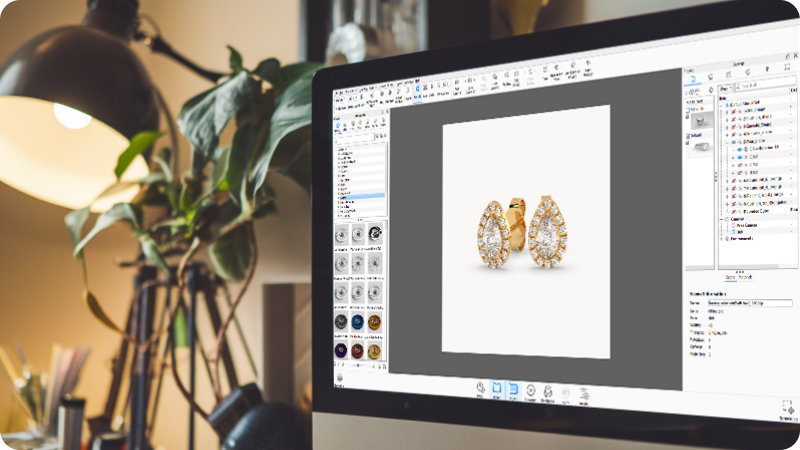
1. High-Resolution 3D Modeling
3D modeling creates detailed digital versions of jewelry items. Designers use advanced software to ensure that every small detail, from stone settings to engravings, is accurately represented. This precision helps eliminate errors in the final production.
2. Realistic Materials and Textures
One of the key aspects of 3D rendering is the ability to apply realistic textures to the digital model. Jewelry designers can replicate metals like gold, silver, and platinum, as well as gemstones like diamonds, sapphires, and emeralds. These realistic materials help customers visualize how the actual product will look.
3. Advanced Lighting Techniques
Lighting plays a crucial role in jewelry visualization. 3D rendering software simulates real-world lighting conditions, creating realistic reflections, refractions, and shadows. Designers can test different lighting setups to see how a piece will look in various environments, such as natural daylight or indoor lighting.
4. Surface Finishes
Jewelry pieces come in various surface finishes, including:
Polished – A shiny and reflective surface.
Matte – A smooth, non-reflective finish.
Brushed – A textured look created by tiny lines.
Hammered – A handcrafted look with small indentations.
With 3D rendering, these finishes can be accurately represented, helping customers choose their preferred style.
5. Interactive 3D Views and Animations
Some rendering services offer 360-degree views and animations that allow customers to rotate the jewelry model and see it from all angles. This makes the online shopping experience more engaging and reduces uncertainty when purchasing jewelry online
Benefits of 3D Jewelry Rendering
For Jewelry Brands and Businesses
Cost and Time Efficiency – Reduces the need for physical prototypes, saving production costs.
Precision & Accuracy – Ensures exact measurements and stone placements.
Fewer Errors in Production – Digital previews ensure all details are correct before manufacturing.
Better Online Marketing – High-quality 3D images can be used for websites, social media, and advertising.
Realistic Previews – Helps clients visualize the final product before manufacturing.
Customization and Modifications – Jewelry designs can be adjusted easily based on customer preferences.
For Customers
Better Visualization – Customers can see exactly what the jewelry will look like before buying.
Easy Customization – They can change metal types, gemstones, and finishes according to their taste.
Reduced Return Rates – When customers see a realistic preview, they are more confident in their purchase, leading to fewer returns.
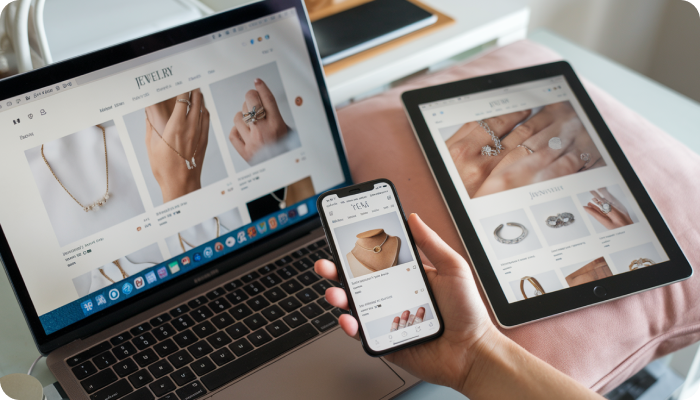
Convenience – Customers can explore jewelry designs from home without visiting a store.
What Are 3D/CAD Files in Jewelry Rendering?
3D/CAD (Computer-Aided Design) files are digital design files used in jewelry rendering to create highly detailed and precise models of jewelry pieces before they are physically manufactured. These files are essential in modern jewelry design, enabling designers and jewelers to visualize, modify, and perfect their creations in a virtual environment.
How 3D/CAD Files Work in Jewelry Rendering
Concept Design: A jewelry designer creates a 3D model using CAD software like Rhino, MatrixGold, ZBrush, or JewelCAD.
Rendering: The CAD model is then rendered into high-resolution images or videos to showcase the jewelry’s appearance with realistic lighting, reflections, and textures.
Prototyping: The CAD file can be used for 3D printing to create a wax or resin prototype, which is later used in the casting process.
Manufacturing: After final adjustments, the CAD file guides the production process, ensuring precision in stone settings, engravings, and metalwork.
Common 3D/CAD File Formats in Jewelry Design
.STL – Used for 3D printing and prototyping.
.OBJ – A widely used format for rendering and 3D modeling.
.3DM – Native to Rhino and MatrixGold, commonly used for jewelry design.
.IGES/.STEP – For transferring files between different CAD software.
How is 3D Jewelry Rendering Created?
Step 1: 3D Modeling
The first step in 3D rendering is creating a mathematical representation of the jewelry piece using software such as Rhino, MatrixGold, or JewelCAD. This forms the base structure of the design.
Step 2: Camera Setup
Like a professional photo shoot, the virtual camera is positioned at different angles to capture the best views of the jewelry piece. Proper camera placement ensures high-quality renders.
Step 3: Lighting Setup
Lighting is applied in the digital environment to simulate real-world conditions. This helps in highlighting the metal shine, gemstone sparkle, and intricate details of the jewelry.
Step 4: Applying Materials and Textures
Different metal and gemstone textures are added to the model. Designers fine-tune these materials to ensure they look realistic, mimicking how light interacts with various surfaces.
Step 5: Rendering the Image
Once the model is complete, the software processes the image, generating a high-resolution render. This image is then refined using tools like Photoshop to enhance its final appearance.
Step 6: Final Touches and Delivery
The completed 3D jewelry rendering is used for marketing, online catalogs, or virtual try-on experiences, providing a highly engaging and informative shopping experience.
Use Cases of 3D Jewelry Rendering
Many leading jewelry brands use 3D rendering to enhance their customer experience:
Tiffany & Co. – Offers 360-degree jewelry views, allowing customers to rotate rings, bracelets, and necklaces to see all angles.
Chaumet – Uses high-quality 3D rendering to display fine details and craftsmanship.
Pomellato – Provides lifelike jewelry images, showcasing surface textures and gemstone clarity with high precision.
These brands use advanced 3D rendering technology to create realistic representations, improving customer confidence and online sales.
Conclusion
3D jewelry rendering is transforming the way jewelry is designed, marketed, and sold. It provides realistic previews, allowing customers to make informed purchasing decisions. For businesses, it reduces costs, improves customization options, and enhances marketing strategies.
As online shopping grows, 3D jewelry rendering is becoming an essential tool for jewelers looking to stay ahead of the competition. Whether you’re a jewelry brand or a customer, using 3D visualization ensures a seamless and more satisfying jewelry-buying experience.
Would you like to explore Jewelry Rendering Software recommendations or techniques for rendering jewelry in CAD?
Read more:
Rendering vs. Photography: Which is Better for Showcasing Your Jewelry?
What is 3D Jewelry Rendering and How Does It Work?
Create realistic rendering for your business!!
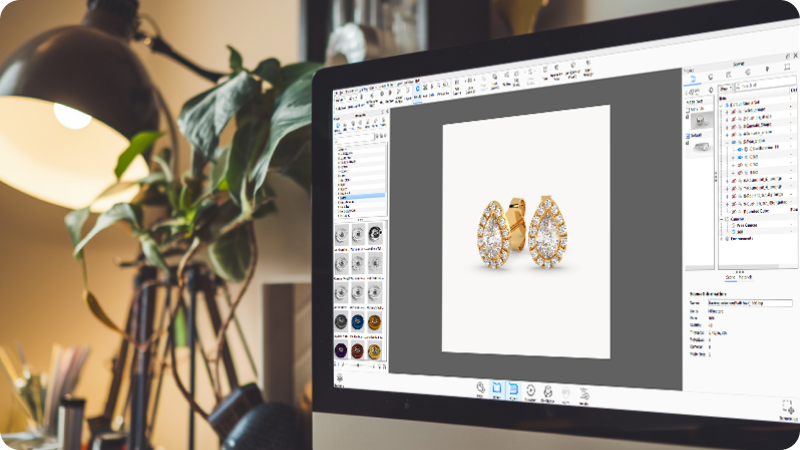
JewelExperts.com offers top-notch 3D jewelry rendering services, helping jewelers bring their designs to life with high-quality, realistic images. Our advanced 3D modeling techniques enable customers to visualize jewelry pieces before they are manufactured. Whether it's a custom engagement ring or a unique necklace, JewelExperts.com provides detailed and lifelike renderings that showcase every element, from intricate gemstone settings to various metal textures. Our expertise in 3D jewelry rendering ensures that jewelers can make adjustments to designs quickly and accurately, giving customers a clearer idea of what the final product will look like. So, hurry up and get your jewelry store a stunning upgrade with the Best 3D Jewelry Rendering Services!!

.png)