+32 460 23 96 44

On this page
- Understanding the Real Cost Behind the Numbers
- Where Does the Money Actually Go?
- A Practical Comparison: Shopify vs Custom Development
- What We’ve Learned from Real Jewelry Projects
- The Hidden Costs Most Brands Don’t Consider
- Why Cheaper Isn’t Always Better
- How to Think About Your Budget Strategically
- The Future of Jewelry eCommerce (And Its Impact on Cost)
- Why JewelExperts.com
- Conclusion
“How much does it cost to build a jewelry eCommerce website?”
It’s one of the most common questions — and also one of the most misunderstood.
Most answers you’ll find online give you a price range, but they don’t explain why the cost varies so much. And that’s where most jewelry brands make mistakes. They focus on finding the lowest quote instead of understanding what they are actually paying for.
From our experience at JewelExperts.com, the cost of jewelry website development is not just about building a website — it’s about building a system that can sell high-value products, build trust, and scale over time.
Some brands spend a few thousand dollars and struggle. Others invest strategically and turn their website into a consistent revenue channel.
The difference is never just the budget. It’s the approach.
Understanding the Real Cost Behind the Numbers
If we simplify things, a jewelry eCommerce website can cost anywhere between $1,000 and $30,000 or more. But this range only tells part of the story.
At the lower end, you’re usually getting a template-based setup. It works, but it feels like every other website. There’s very little differentiation, and as competition increases, these websites struggle to convert.
At the mid-level, things start to improve. The design becomes more refined, the experience feels smoother, and the website is built with some level of strategy. For many growing brands, this is where things begin to work.
At the higher end, the focus shifts completely. You’re no longer just building a website — you’re building a digital experience. This includes customization features, better performance, and a structure that is designed to convert users into buyers.
So the real question isn’t “How much does it cost?”
It’s: What kind of website are you trying to build?
Read More - Creating a Jewelry Website – Factors to Consider for an eCommerce Jewelry Website
Where Does the Money Actually Go?
One of the biggest gaps in most cost guides is that they don’t explain where the budget is actually spent.
In reality, the cost is distributed across several layers, and each layer directly impacts how your website performs.
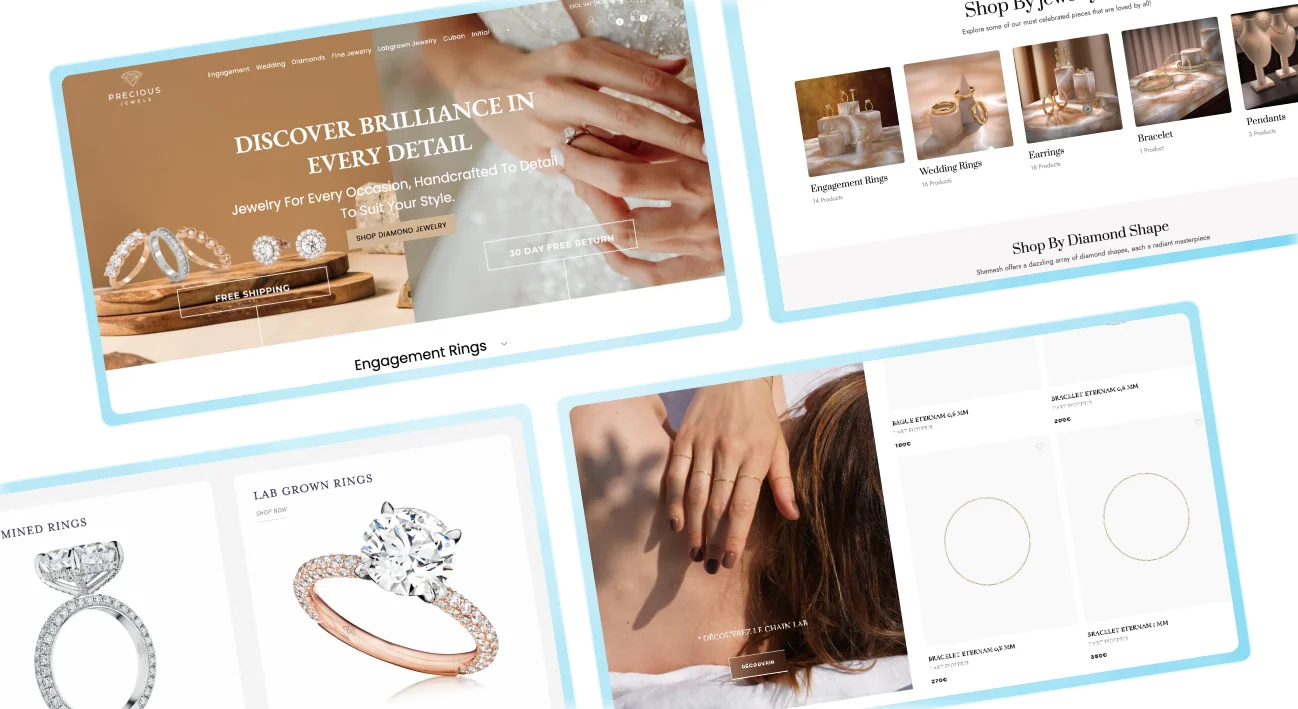
A significant portion goes into design — not just how the website looks, but how it feels to navigate. Jewelry is a visual category, so even small design improvements can influence buying decisions.
Another major component is development. This includes everything from product pages to filtering systems and checkout flow. If your website is meant to handle customization, this part becomes even more complex.
Then comes performance. Jewelry websites often rely on high-quality images and sometimes 3D assets. Without proper optimization, these elements can slow down the site and hurt conversions.
Finally, there’s SEO and structure. A website that isn’t built with search visibility in mind may look great, but it will struggle to attract organic traffic.
When you look at it this way, the cost starts to make more sense. You’re not just paying for a website — you’re paying for multiple systems working together.
Read More - How Much Does Jewelry Website Development Cost?
A Practical Comparison: Shopify vs Custom Development

At some point, every jewelry brand faces this decision.
Shopify is often the starting point because it’s faster and more affordable. You can launch quickly, and for basic setups, it works well. But as your requirements grow, limitations start to appear — especially if you want advanced customization or unique user experiences.
Custom development, on the other hand, gives you complete control. It allows you to build exactly what your brand needs, without platform limitations. But it requires a higher investment and a more strategic approach.
From what we’ve seen, brands that plan to stay small or test the market often start with Shopify. Brands that are serious about scaling, especially those offering customization or premium positioning, eventually move toward custom solutions.
The key is not choosing what’s cheaper — it’s choosing what aligns with your long-term goals.
Read More - 5 Common Website Mistakes Costing You Jewellery Sales
What We’ve Learned from Real Jewelry Projects
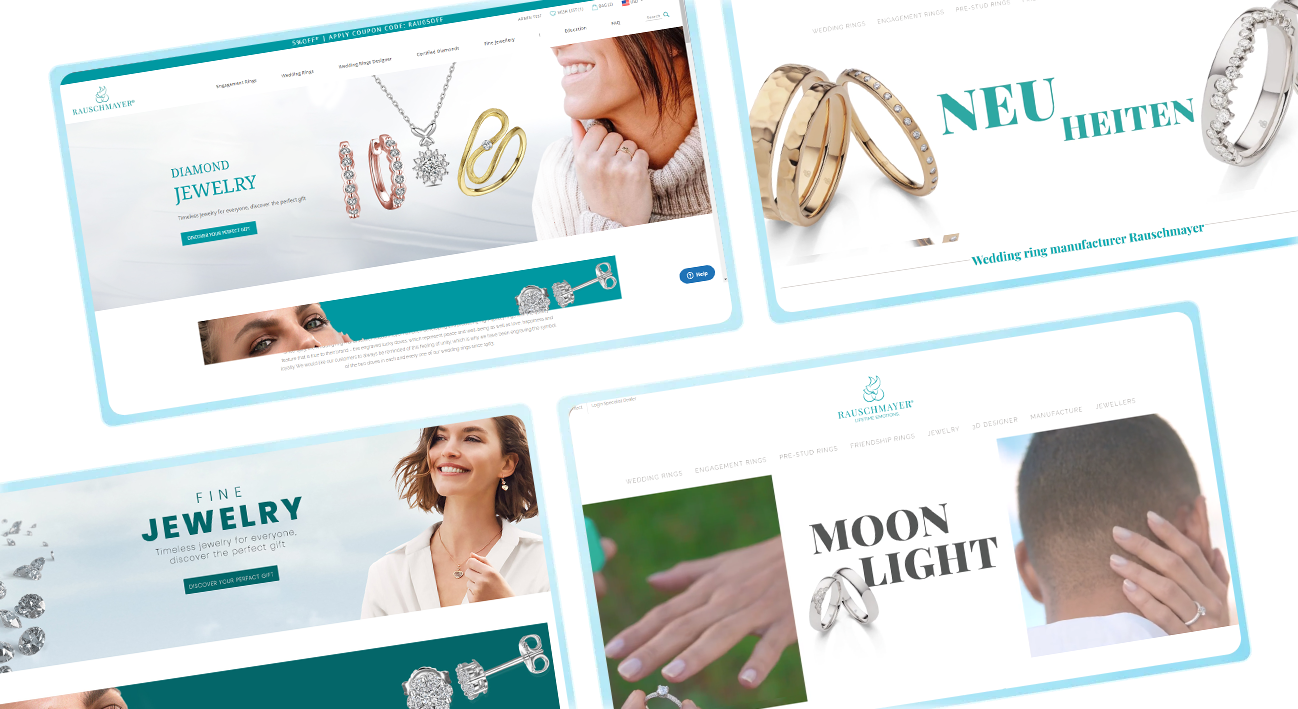
Working with brands like Forevery.one, Grand Diamonds, Persee Paris, and Rauschmayer has given us a clear understanding of how cost decisions impact performance.
In one case, a brand had already invested in a visually appealing website, but users weren’t engaging. The issue wasn’t design — it was structure. Once the navigation and user flow were improved, the overall interaction changed significantly without a massive increase in budget.
In another project, the challenge was trust. The products were premium, but the website didn’t communicate that effectively. By improving product presentation and adding clarity around details, the buying experience became much stronger.
Across multiple projects, one pattern stands out clearly:
“Websites that guide users and reduce confusion always perform better — regardless of how much was spent.”
The Hidden Costs Most Brands Don’t Consider
What surprises many business owners is that development is only part of the total investment.
Once the website is live, ongoing improvements become necessary. This includes fixing issues, updating features, and optimizing performance over time.
Then comes content. Jewelry websites rely heavily on visuals and product descriptions. Creating and maintaining this content requires effort and budget.
And of course, there’s marketing. Without SEO or promotion, even the best-built website won’t attract traffic.
When all of this is considered, it becomes clear that the real investment goes beyond the initial build.
Read More - Why You Need Your Own Jewelry Website
Why Cheaper Isn’t Always Better
It’s natural to want to reduce costs, especially in the early stages. But in jewelry eCommerce, this often leads to bigger problems later.
A low-cost website may look acceptable at first, but it usually lacks depth. It doesn’t guide users properly, it doesn’t build trust effectively, and it doesn’t scale well.
We’ve seen many brands rebuild their websites within a year because the initial version couldn’t support their growth.
In contrast, a well-planned investment may seem higher upfront, but it creates a foundation that lasts longer and performs better.
How to Think About Your Budget Strategically
Instead of focusing only on how much you can spend, it’s more useful to think about what you want your website to achieve.
If your goal is to test the market, a simpler setup may be enough. But if you’re aiming to build a strong online presence, your investment should reflect that.
The most effective approach is to start with a solid foundation — a website that is fast, easy to use, and built with a clear structure. From there, features like customization and advanced visuals can be added as the business grows.
This way, you’re not overspending, but you’re also not limiting your future growth.
The Future of Jewelry eCommerce (And Its Impact on Cost)
The expectations from jewelry websites are evolving quickly.
Users are no longer satisfied with static product pages. They want to interact, customize, and visualize products before making a decision.
Technologies like 3D visualization, personalization, and virtual try-ons are becoming more common. These features naturally increase development costs, but they also improve user engagement and conversion rates.
Brands that adopt these trends early often gain a competitive advantage.
Why JewelExperts.com
At JewelExperts.com, our focus has always been on building websites that do more than just look good.
Our experience with different jewelry brands has shown us that success comes from combining design, performance, and strategy — not just development.
Every project is approached with a clear understanding of how users behave, what influences their decisions, and how a website can guide them effectively.
That’s what allows us to create platforms that are not only visually appealing but also built to perform.
Conclusion
The cost of jewelry ecommerce website development is not fixed, and it shouldn’t be treated as a simple expense.
It’s an investment in how your brand is presented, how users interact with your products, and how effectively your business can grow online.
A cheaper website may seem like a smart decision in the short term, but a well-planned, strategic build will always deliver better results over time.
If you approach it with the right mindset, your website can become one of your strongest business assets.