+32 460 23 96 44

On this page
- What is Jewelry Website Development?
- Why Most Jewelry Websites Fail
- Case Study Insights from Real Jewelry Brands
- Case Study 1: Forevery.one
- Case Study 2: Grand Diamonds
- Case Study 3: Rauschmayer
- Expert Insights: What Actually Drives Conversions
- 1. Speed Matters More Than Design
- 2. Guided Selling is the Future
- 3. Customization is No Longer Optional
- 4. Trust is the Real Conversion Driver
- Core Features of a High-Converting Jewelry Website
- Product Experience
- Navigation & Discovery
- Customization Tools
- Mobile Optimization
- Secure & Transparent Checkout
- The Right Approach to Jewelry Website Development
- SEO Strategy That Actually Works for Jewelry Websites
- The Future of Jewelry eCommerce
- Why JewelExperts
- Conclusion
The jewelry industry is no longer just about craftsmanship — it’s about digital experience.
Today, brands that invest in jewelry website development are the ones capturing attention, building trust, and driving consistent online revenue. But here’s the reality:
Most jewelry websites fail — not because of design, but because of poor strategy.
At JewelExperts, we’ve worked with global jewelry brands and seen firsthand what separates a high-performing website from one that barely converts.
This guide goes beyond theory. It combines practical experience, tested strategies and specialist insight to help you understand what actually works in jewellery ecommerce website development.
What is Jewelry Website Development?
Jewelry website development is the process of building a specialized eCommerce platform designed specifically for selling jewelry online.
But unlike generic eCommerce, this niche requires a much deeper focus on:
Visual storytelling
Product customization
Emotional buying behavior
High-value transaction trust
This is why jewelry ecommerce development is not just about building a website — it’s about engineering a conversion system.
Why Most Jewelry Websites Fail
After working on multiple jewelry projects, one pattern is clear:
“Most brands focus on aesthetics, not performance.”
Here are the biggest mistakes we consistently see:
Many jewelry brands invest heavily in beautiful UI, but completely ignore load speed. High-resolution images slow down the website, causing users to drop off before even exploring products.
Another common issue is the lack of guided navigation. Jewelry buyers are often unsure of what they want, yet most websites don’t help them discover products effectively.
And perhaps the biggest gap — no customization experience. Modern buyers expect to design their own rings or personalize products, but most websites still operate like static catalogs.
Case Study Insights from Real Jewelry Brands
Case Study 1: Forevery.one
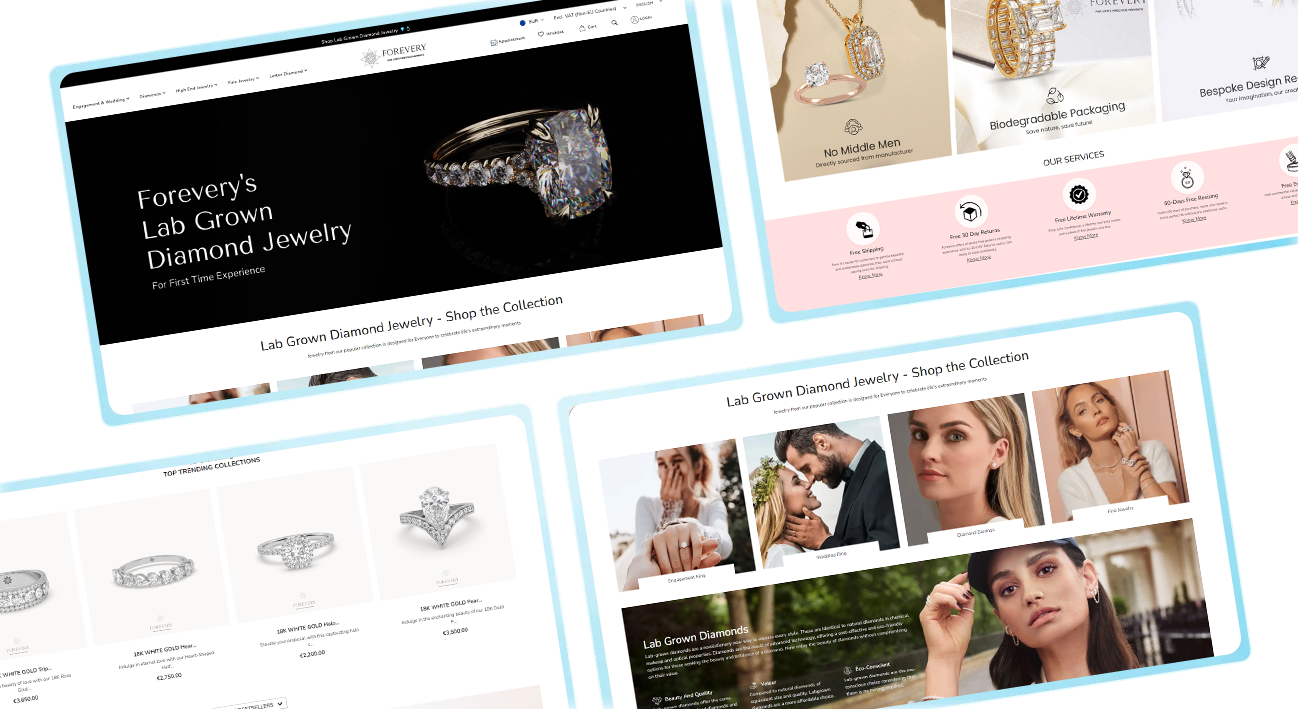
Challenge:
The brand had a visually appealing website but struggled with conversions and user engagement.
What We Identified:
Poor product discovery flow
No clear customization journey
Weak mobile experience
What Was Improved:
We restructured the entire navigation and introduced a more intuitive browsing experience. The focus was on helping users move from inspiration to purchase without friction.
Result:
Improved user engagement
Higher time spent on the site
Noticeable increase in conversion flow efficiency
Case Study 2: Grand Diamonds
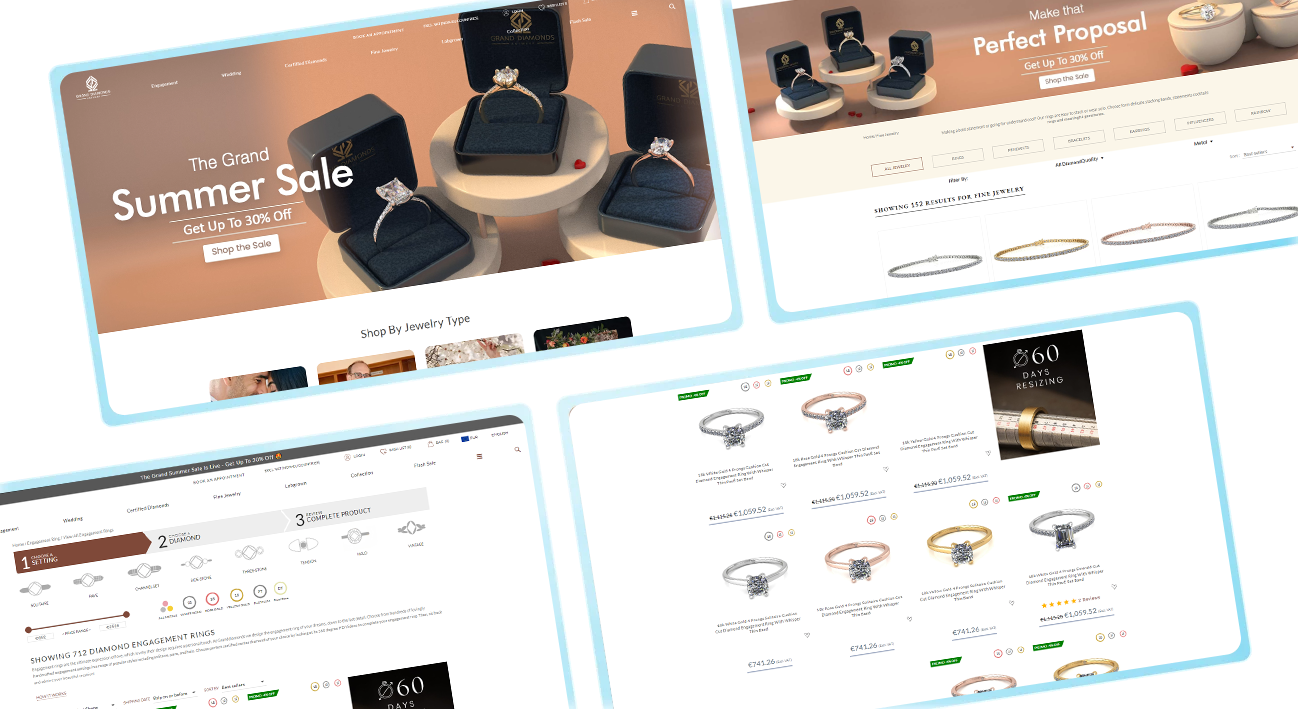
Challenge:
High-quality products but low online sales.
What We Identified:
Lack of trust-building elements
Weak product presentation
No strong differentiation
What Was Improved:
We enhanced product pages with better visuals, structured information, and trust signals like certifications and clarity in pricing.
Result:
Better user confidence
Increased product page interactions
Improved conversion intent
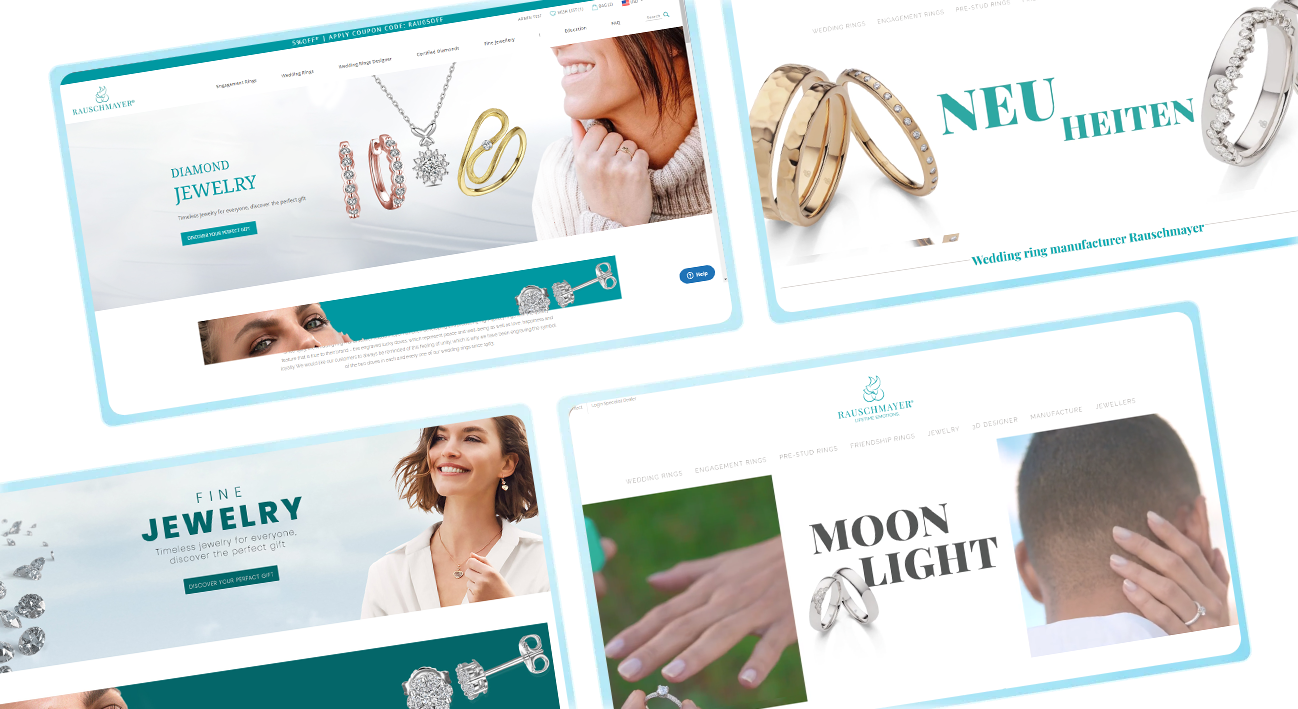
Case Study 3: Rauschmayer
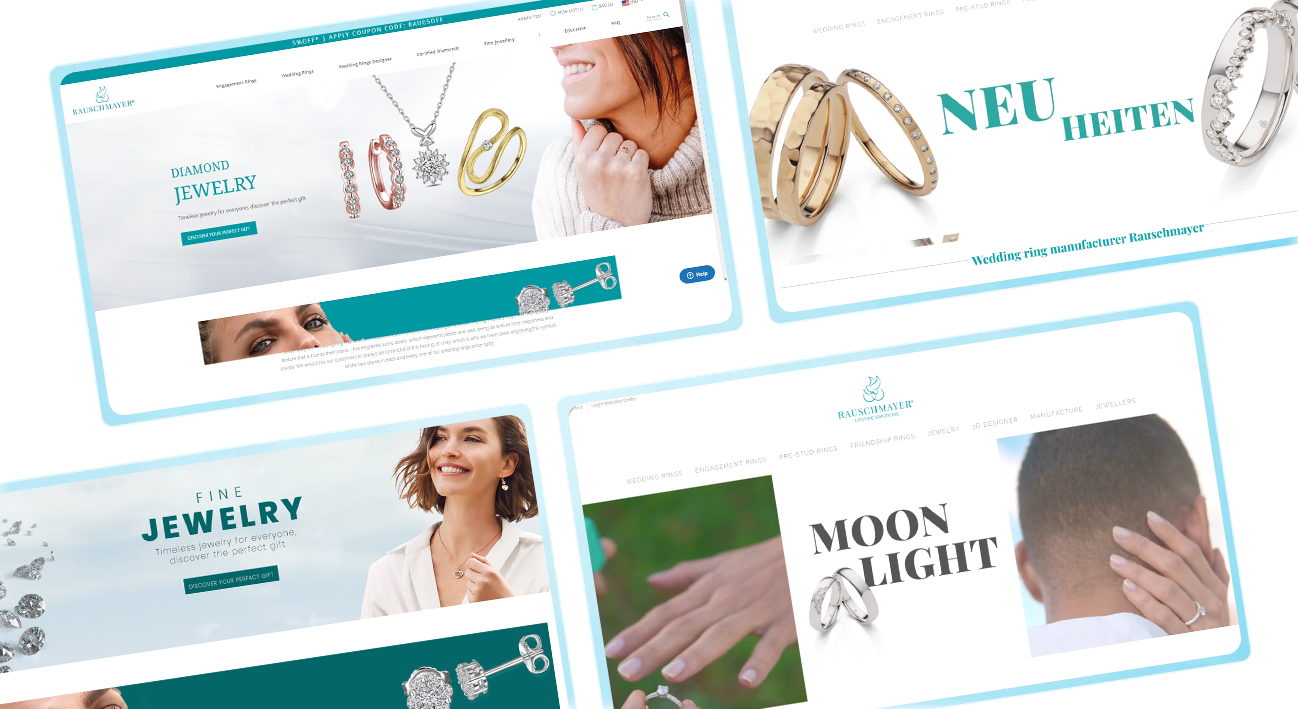
Across these projects, one consistent learning emerged:
Luxury jewelry buyers need reassurance at every step.
By improving:
Product storytelling
Visual clarity
Checkout simplicity
We observed a clear improvement in how users interacted with the platform and moved toward purchase decisions.
Expert Insights: What Actually Drives Conversions
After years of working in jewelry store web development, here are the insights that are often overlooked:
1. Speed Matters More Than Design
A stunning website that loads slowly will always lose to a simpler but faster one.
In jewelry, where images are heavy, optimizing performance is not optional — it’s critical.
2. Guided Selling is the Future
Users don’t just want to browse — they want guidance.
High-performing jewelry websites:
Suggest products
Educate users
Simplify decisions
3. Customization is No Longer Optional
The rise of custom ring design and personalization has changed buyer expectations.
If your platform doesn’t support customization, you’re losing a major segment of modern buyers.
4. Trust is the Real Conversion Driver
For high-value purchases, users ask:
Is this brand reliable?
Is pricing transparent?
Can I trust this product?
Your website must answer these questions before the user even asks.
Core Features of a High-Converting Jewelry Website
A successful jewellery ecommerce website development strategy focuses on building an experience — not just a storefront.
Product Experience
Your product pages should feel immersive. High-resolution images, zoom functionality, and multiple viewing angles are essential. Users should feel as if they are examining the jewelry in person.
Navigation & Discovery
Instead of overwhelming users, your website should guide them. Smart filtering, categorized browsing, and intuitive menus help users find what they’re looking for quickly.
Customization Tools
One of the biggest differentiators in modern jewelry ecommerce development is the ability to personalize products. Whether it’s selecting a diamond or designing a ring, this feature significantly increases engagement.
Mobile Optimization
Most users browse on mobile devices. A slow or poorly designed mobile experience can destroy conversions instantly.
Secure & Transparent Checkout
Transparency in pricing, secure payment gateways, and a frictionless checkout process are essential for building trust.
The Right Approach to Jewelry Website Development
Building a jewelry website should follow a strategic process.
It starts with understanding your business model — whether you’re selling ready-made products or custom designs.
From there, the focus shifts to designing a user experience that reflects your brand while guiding users toward purchase decisions.
Development is not just about features — it’s about performance. Speed optimization, structured data, and SEO implementation play a crucial role in visibility.
Finally, continuous optimization is what separates average websites from high-performing ones.
SEO Strategy That Actually Works for Jewelry Websites
Ranking a jewelry website requires more than just keywords.
Yes, targeting terms like:
jewelry website development
jewelry ecommerce development
jewelry store web development
is important.
But what truly drives results is content depth and authority.
Instead of creating isolated pages, successful brands build content ecosystems — interconnected blogs that cover every aspect of the topic.
Internal linking, technical SEO, and consistent publishing are what signal authority to search engines.
The Future of Jewelry eCommerce
The industry is evolving rapidly.
3D visualization is becoming standard, allowing users to explore products in detail before purchasing.
AI-driven personalization is helping brands recommend products based on user behavior.
Augmented reality is enabling virtual try-ons, bringing the in-store experience online.
And customization is moving toward mass personalization, where users expect full control over design.
Why JewelExperts
At JewelExperts, we don’t just build websites — we build conversion-focused digital experiences for jewelry brands.
Our work with brands like:
Forevery.one
Grand Diamonds
Diamonds International
Precious Jewel
has helped us understand the nuances of this industry.
We combine:
Technical expertise
Industry knowledge
Conversion strategy
to deliver platforms that look premium and perform well.
Conclusion
Jewelry website development is no longer just a technical process — it’s a strategic investment.
The brands that succeed are the ones that:
Focus on user experience
Prioritize performance
Build trust
Embrace customization
If your goal is to scale your jewelry business online, the right development approach can make all the difference.