+32 460 23 96 44

On this page
- How Does James Allen’s 3D Virtual Try-On Work?
- Benefits of 3D Virtual Try-On for Customers
- 1. Enhanced Shopping Experience
- 2. Reduced Uncertainty
- 3. Convenience and Accessibility
- 4. Improved Customization Choices
- 5. Lower Return Rates
- Challenges of Implementing 3D Virtual Try-On
- The Future of Virtual Jewelry Shopping
- Conclusion
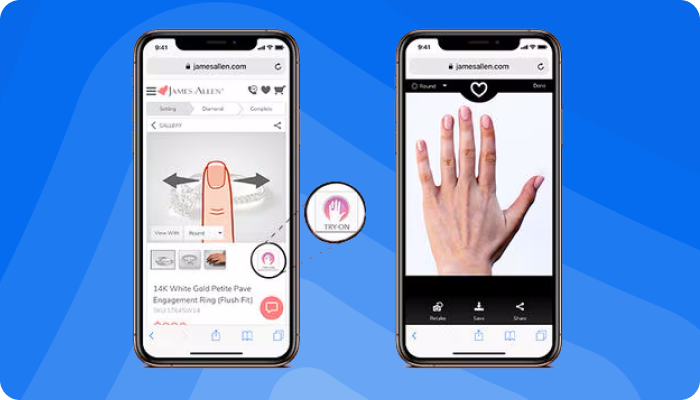
Shopping for jewelry online has always come with a challenge – customers want to see how a piece will look before making a purchase. James Allen, a leading online jeweler, has introduced a 3D virtual try-on feature that is changing the way people buy jewelry online. This innovative technology allows customers to try on rings, earrings, and other jewelry pieces virtually, giving them a realistic preview of how the piece will look on their hands, ears, or neck.
With the rise of online shopping, this feature has become a game-changer, making it easier for customers to shop with confidence. Let’s explore how James Allen’s 3D virtual try-on is transforming the jewelry shopping experience.
How Does James Allen’s 3D Virtual Try-On Work?
James Allen’s 3D virtual try-on is designed to provide a realistic and interactive shopping experience. Here’s how it works:
Accessing the Feature: Customers can visit the James Allen website on their smartphone or desktop.
Choosing a Piece: Shoppers can browse thousands of engagement rings, wedding bands, earrings, and other jewelry items.
Activating the Try-On: Using their phone’s camera, customers can place the selected ring on their finger or try on earrings in real-time.
Adjusting for Accuracy: The feature allows users to adjust the size and angle of the jewelry piece to ensure a natural and accurate fit.
Making an Informed Purchase: After seeing how the jewelry looks on them, customers can confidently decide whether to proceed with the purchase.
This process eliminates the uncertainty that often comes with buying high-value jewelry online.
Benefits of 3D Virtual Try-On for Customers
The 3D virtual try-on feature provides multiple advantages to customers, making the jewelry shopping process more engaging and convenient.
1. Enhanced Shopping Experience
Virtual try-on technology allows customers to interact with jewelry in a way that closely resembles an in-store experience. They can see how different designs look on their hands, ears, or neck before making a final decision.
2. Reduced Uncertainty
One of the biggest challenges of online jewelry shopping is the fear of choosing the wrong piece. The virtual try-on feature minimizes this risk by providing a realistic preview, helping customers make confident decisions.
3. Convenience and Accessibility
Customers no longer have to visit a physical store to try on rings or earrings. They can shop from anywhere, at any time, making it easier for busy individuals or those who prefer online shopping.
4. Improved Customization Choices
Many jewelry pieces can be customized in terms of metal, diamond shape, and size. With 3D virtual try-on, customers can visualize these changes in real-time, ensuring that they pick a design that suits their style and preference.
5. Lower Return Rates
By allowing customers to see how jewelry looks on them before buying, virtual try-on technology helps reduce the number of returns due to dissatisfaction. This benefits both customers and retailers.
Why Jewelers Should Implement 3D Virtual Try-On Technology
As online jewelry shopping grows, jewelers need to adopt innovative trends to stay competitive. Here’s why implementing a 3D virtual try-on can be a valuable investment for jewelry businesses:
Increases Online Sales: Customers who can visualize jewelry on themselves are more likely to complete their purchase.
Enhances Customer Experience: A smooth and interactive shopping experience builds trust and engagement.
Reduces Returns and Exchanges: With better-informed decisions, customers are less likely to return products.
Attracts Tech-Savvy Shoppers: Younger generations, who are accustomed to online shopping and AR (augmented reality) experiences, appreciate and expect such features.
Builds Brand Credibility: Jewelers offering innovative shopping solutions position themselves as modern and customer-centric businesses.
Encourages Customization and Personalization: Customers can experiment with different styles, settings, and stone shapes, making the buying experience more personal and engaging.
Competes with Major Online Retailers: As e-commerce giants continue to evolve, independent jewelers must embrace advanced technology to remain relevant.
Bridges the Gap Between Online and In-Store Shopping: While physical stores offer a tactile experience, virtual try-on provides an interactive digital alternative that closely mimics in-person shopping.
Challenges of Implementing 3D Virtual Try-On
While 3D virtual try-on technology offers numerous benefits, jewelers may face some challenges when adopting it. Some of the key challenges include:
High Initial Investment: Developing or integrating virtual try-on technology requires a significant financial investment in software, AR technology, and user interface design.
Technical Expertise Required: Jewelers need to ensure that their websites and applications are optimized to support the feature without glitches or delays.
User Adoption and Awareness: Customers unfamiliar with virtual try-on may need guidance on how to use the feature effectively.
Integration with Existing Inventory: Ensuring that all jewelry items are accurately represented in 3D format requires time and effort.
Despite these challenges, the benefits far outweigh the costs, making virtual try-on a worthwhile investment for modern jewelry businesses.
The Future of Virtual Jewelry Shopping
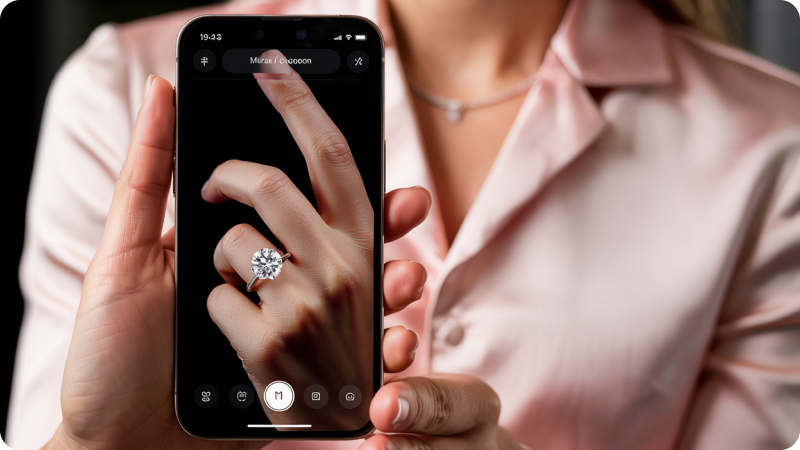
As technology continues to evolve, virtual jewelry shopping is expected to become even more advanced. Here are some possible future developments:
More Realistic 3D Rendering: Improved AI and AR capabilities will make virtual try-ons even more lifelike.
Virtual Try-On for Entire Jewelry Sets: Customers may soon be able to try on multiple pieces, such as rings, earrings, and necklaces, simultaneously.
AI-powered personalized Recommendations: Artificial intelligence may analyze customer preferences and suggest jewelry styles based on previous choices.
Seamless Integration with Social Media: Customers might be able to share virtual try-on images directly on social media for opinions from friends and family.
Virtual Reality (VR) Shopping Showrooms: Advanced VR technology may allow users to walk through virtual jewelry showrooms, enhancing the online shopping experience even further.
Conclusion
James Allen’s 3D virtual try-on has redefined how people shop for jewelry online, providing a more immersive, accurate, and enjoyable experience. This trend is gaining popularity as it helps customers feel more confident in their purchases. For jewelers, implementing this technology can increase sales, improve customer satisfaction, and reduce return rates, making it a must-have tool in today’s digital shopping world.
As the jewelry industry continues to embrace digital transformation, virtual try-on technology will become an essential part of the online shopping experience. Jewelers who adopt this trend early will have a competitive advantage, attracting more customers and ensuring long-term success in the evolving e-commerce landscape.